 By 變美體驗官
After getting cosmetic procedures in South Korea, many people wonder the same thing: “If there’s leftover serum, can I take it back? Would it be cheaper to have someone inject it for me in Taiwan or mainland China?”
Here’s the answer upfront: You can’t take it away, and it’s not recommended to bring it back to your home country to have it done there. It’s not that clinics want to make more money from this — it’s due to legal issues, storage requirements, liability questions, and customs regulations. In today’s article, we’ll clarify everything about this once and for all. After reading it, you’ll probably be glad you didn’t act on impulse.
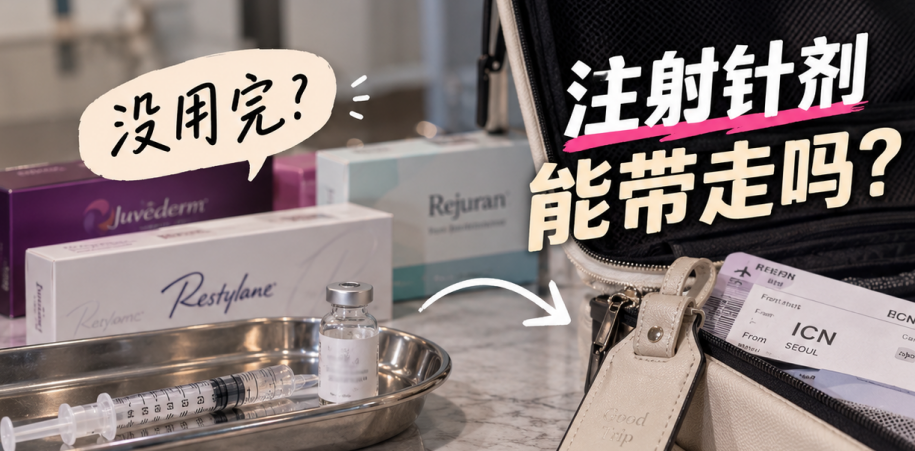
I. Why would someone want to take home unused injections? Three common mindsets
Those who think this way usually aren’t after a cheap deal; rather, they believe “I paid for it, so it’s only fair to take it home if I haven’t used it all.” These three mindsets are the most common:
I think it’s a waste of money if you don’t use it up.
- Injectable treatments are usually priced by “vial” or “centum core.” If you finish the treatment only to find half a vial left, it’s inevitable to feel like you got ripped off.
- But the pricing for medical aesthetics already includes the doctor’s skills, the facility, anesthesia, and post-operative risk management—it’s not just about purchasing raw materials.
- Taking home the leftover syringes won’t help you “make up for” the loss — in fact, they might be completely ruined due to improper storage.
Thinking, “It’s cheaper to go back home and get it done from someone I know.”
- Some people think that finding a clinic or studio in China Taiwan or mainland China to do the injections on their behalf can save them the cost of getting them done in South Korea.
- But the person filling in for them may not know the source, batch number, storage ONDO, or expiration date of this injection.
- Once something goes wrong, it’s hard to determine who’s at fault, and in the end, you’re the one who suffers.
Led to believe that “injections can be brought back like cosmetics”
- Skincare products and face masks can be shipped, but injection needles are considered medical supplies, and they fall under completely different customs categories.
- Many people confuse injectables with “boutique skincare products,” only to realize their mistake when stopped at customs.
- Even if you avoid being stopped by customs, getting injections done privately violates medical regulations in many places.
BeautsGO Chinese Booking Portal
II. Why don’t Dermatology clinics in South Korea allow you to take home the injection needles?
Reputable Dermatology clinics or cosmetic surgery centers in South Korea generally don’t allow patients to take leftover injections home. The reason is quite practical:
Strict storage conditions are required for the injections
- Ingredients such as Filler, Botox, and hyaluronic acid injections are sensitive to ONDO and glow, and may spoil if not kept within the proper refrigeration conditions.
- Once opened, a vial of injection will face a significantly increased risk of contamination if not stored in a sterile environment.
- Clinics are reluctant to take on any medical liability associated with injections given after the patient leaves, so they simply refuse to provide them from the start.
South Korea’s medical regulations set clear guidelines.
- Medical drugs and injection syringes are part of medical procedures and should, in principle, be stored and used by medical institutions.
- If a doctor allows a patient to take controlled or prescription-grade injections home, they may face liability under drug regulations and medical laws.
- Reputable clinics would rather “waste” resources than take that risk—this is actually a way of protecting both parties.
It’s unclear who’s responsible.
- Once the injection leaves the clinic, who knows if it’s been changed into a new vial, heated, frozen, or opened?
- If infections, embolisms, or allergies occur in the future, clinics in South Korea can outright claim that “we are not responsible for conditions that arise after leaving the clinic.”
- From the clinic’s perspective, preventing patients from taking things away is the simplest way to manage risks.
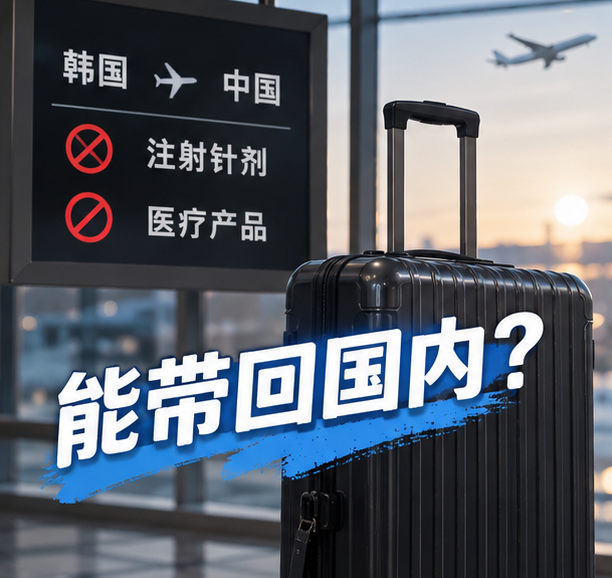
III. Take it back to China to have someone do it? Understand the risks at a glance
This is the most dangerous step. Many people think, “As long as the injection is genuine, it doesn’t matter who administers it,” but cosmetic injections are never just about the product alone.
The source and storage history cannot be traced.
- After the injections were taken out of South Korea, there are no records of the ONDO or vibrations during transportation.
- Even if the outer packaging seems fine, it’s impossible to tell with the naked eye whether the internal ingredients have degraded or become contaminated.
- Even those who get the injections back in their home country may not have the expertise to determine whether this injection is still usable.
Injection techniques and first-aid measures
- There’s a risk of embolism when getting Filler injections, and injecting Botox in the wrong area can affect facial expressions—both situations require professional judgment.
- Reputable clinics are equipped with first-aid supplies and standard procedures for handling emergencies, whereas studios or private venues usually don’t have these.
- Once a vascular embolism occurs, the golden window for treatment is extremely short—just a few minutes can determine the outcome.
Legal risks can’t be avoided on either side
- In Taiwan, Hong Kong, and mainland China, administering medical injections without proper licensing can be illegal.
- Bringing medications into the country can itself violate pharmaceutical laws and customs regulations, with confiscation or fines being the least severe consequences.
- If severe complications occur, the provider might simply disappear, leaving you with no way to seek compensation.
IV. Customs and Shipping: You can’t just bring whatever you want
Putting aside medical risks, just the question of “whether one can board a plane” already has a clear answer.
Basic Regulations for Aviation and Customs
- Injectable needles, medications, and medical devices are mostly classified as controlled items, with restrictions on the quantity and purpose for personal carry by travelers.
- Without a doctor’s prescription or medical certificate, large quantities of injectables can easily be classified as smuggled or illegally imported drugs.
- Even for personal use, customs officers still have the right to ask for details about the source and purpose, and may even seize it for inspection.
Entry risks by region
- Back to Taiwan, China: The import of medications is regulated by pharmaceutical laws, and carrying medical drugs without permission may result in confiscation and fines.
- Returning to Mainland China: Medicinal products for medical aesthetics are classified as special items, and there are stricter restrictions on individuals bringing them into the country.
- Returning to Hong Kong, China: Antibiotics, injection needles, and similar items are regulated under the Pharmacy and Poisons Ordinance, and carrying them illegally can constitute a criminal offense.
| Context | Possible consequences |
|---|---|
| The clinic lets you take the syringes home on your own. | It’s already quite rare, so there are serious doubts about whether the clinic complies with regulations. |
| Bring it back to the country by yourself | Customs inspections, seizures, fines — in severe cases, it can even lead to legal consequences |
| Going back home to find someone to do it on my behalf | The practitioner and location may be illegal, making it difficult to hold anyone accountable if something goes wrong. |
| Contaminated or spoiled injections | Risks such as infection, allergy, embolism, and tissue necrosis |
Plan your South Korea cosmetic surgery trip with BeautsGO
V. What if there’s leftover? Three practical suggestions
Since I can’t take it away and don’t want to waste it, what can be done on the spot?
Discuss the allocation with the doctor on site
- When making the appointment, clearly state the areas you want to improve and the dosage you need, so the doctor can plan everything at once.
- If any remaining product is found at the treatment site, you can ask if it can be “distributed” to other superficial areas such as the neck, eye contour, or hands.
- This is a hundred times safer than taking it away, and it also complies with the clinic’s medical procedures.
Use it for the next follow-up visit
- Some clinics allow unused remaining doses to be used during the next visit, provided that the product is still within its expiration date and has been stored properly.
- This requires the clinic’s cooperation, and not all clinics offer it. Be sure to ask clearly about the rules and expiration date on site.
- If you won’t be going to South Korea in the near future, this path is basically unviable.
Treat it as part of the “medical procedure fee”.
- The cost of medical aesthetics already includes the doctor’s expertise, facility costs, supplies, and risk management—it’s not like buying groceries by weight.
- It’s better to clarify the dosage in person than to regret later for carrying around syringes aimlessly.
- Instead of taking risks with this money, it’s better to spend it wisely on proper procedures.
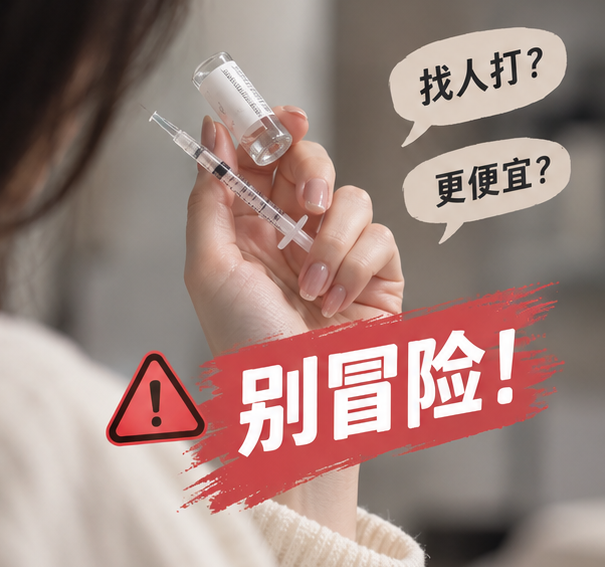
VI. Reminders for Readers in Taiwan, Hong Kong, and Mainland China
Although regulations regarding medical injections vary by region in specific details, the general principle remains the same: carrying and transferring medical drugs privately carries high risks.
Readers in Taiwan, China
- The Pharmaceutical Affairs Law sets clear regulations on imported drugs, and bringing injections into the country through unofficial channels may be classified as prohibited or counterfeit drugs.
- Even for personal use, you need to pay attention to the quantity and purpose description to avoid being deemed by customs as intended for resale.
- It’s recommended to seek an evaluation from a qualified doctor in Taiwan and plan your treatment through proper channels, rather than bringing back leftover injections from South Korea.
Readers in Hong Kong, China
- Hong Kong has strict regulations on injectable needles and medications, making it extremely risky to bring large quantities of medical supplies across the border privately.
- Getting medical injections at a beauty salon or clinic may involve venues and practitioners who are not complying with licensing regulations.
- Rather than taking risks, it’s better to choose a licensed medical institution in Hong Kong for follow-up care.
Readers from the Chinese mainland
- The Chinese mainland enforces strict regulations on medical beauty products, with substances like Botox and Filler classified as prescription drugs or special items.
- If brought into the country on a personal basis and detected, it can result in confiscation and fines at the least, or even charges of drug smuggling at the worst.
- If you want to get additional injections after returning home, it’s recommended to go to reputable hospitals or medical aesthetics clinics rather than hiring private injectors.
VII. Common Q&A
Let’s answer the most frequently asked questions at once:
Q1: Can I take the unopened injections with me?
- In principle, it’s still not recommended, as the shipping and storage conditions can’t be guaranteed.
- It’s standard practice in South Korea’s legitimate clinics to prevent clients from taking unused injections out of the facility.
- If the clinic is willing to let you take it away, you should first verify whether they are compliant.
Q2: The clinic said they can mail it back to my country for me. Is that safe?
- Shipping medical drugs internationally carries higher risks, with a greater likelihood of customs inspections, and the ONDO during shipping cannot be controlled.
- Many countries prohibit individuals from mailing medical medications, and the packages may be returned or destroyed.
- It’s not advisable to take on such uncertainty just to save a little money.
Q3: So when I go to South Korea next time, can I ask to have only the dosage I need prescribed?
- Sure, this is actually the best way to prevent problems: clearly state your budget and desired results when making the appointment.
- Let the doctor determine the dosage based on your needs—avoid adding unnecessary procedures on the spot.
- It’s better to do less and get a follow-up treatment later than to buy too much at once.
Conclusion: Don’t bring it, don’t hide it, and don’t ask anyone to beat it up.
If you have leftover injectables from a cosmetic procedure in South Korea, the best approach is to “leave them at the clinic.” Talking to the doctor on site about how to distribute them for use during your next visit, or treating the remaining amount as part of the risk management fee for the treatment, are all more practical options than taking them home.
Thinking of taking it back to Taiwan, Hong Kong, or the Chinese mainland to get it injected by someone there might seem like a cheaper option, but from storage and customs to legal issues and injection safety, every step comes with its own set of pitfalls. You only have one face — it’s not worth putting yourself at unpredictable risks just to save a little money.
One last thing: Medical aesthetics treatments in South Korea are fun, but rules still need to be followed. Doing your homework, choosing reputable clinics, and planning the right dosage are far more important than anything else. If you’re still planning your trip for medical aesthetics treatments in South Korea, this article can help you organize your time schedule. For price references, it covers details such as the cost of Potenza with Obsidian Dual Wave, the pricing for Sofwave treatments in South Korea (calculated based on the number of sessions), and a practical comparison between Sofwave and Ulthrea. If it’s your first time visiting a Dermatology clinic in South Korea, read “What You Need to Know Before Visiting Cleor Dermatology.” Information on how to make appointments at Theia can also help you understand the process better. Teen readers should first read “Two Golden Rules for Medical Aesthetics Treatments for Minors.” If you want to know the actual recovery timeline after treatment, checking out reviews of the 3-session Obsidian Dual Wave experience and real customer feedback from Rezero in Busan will be very useful.
Disclaimer: This article provides general information on medical aesthetics treatments and risk warnings, and is not intended as medical advice. Laws and regulations in various countries/regions, as well as policies of clinics, may change. Please refer to the guidelines provided by local customs authorities, health authorities, and the clinics you visit for accurate information. If you have any health concerns, consult a qualified medical professional.
Think this article is helpful? Feel free to bookmark it now—review it before your next trip to South Korea as a reminder that leaving the injections at the clinic and returning home safely is the best approach.
Visit BeautsGO to find reputable Dermatology clinics in South Korea