 By 變美體驗官
“I’ve had too many Black Opal Dual Wave treatments—will my face sag?” I’ve heard this question more than a dozen times in the waiting areas of clinics, the comment sections of the BeautsGO app, and even in beauty enthusiast groups. People ask this because Potenza itself implies a “minimally invasive” approach, so they’re worried that if too much energy is applied, the collagen might get damaged before it has a chance to recover, ultimately leading to sagging.
I’ve gotten the Sylfirm X treatment in South Korea three times in total. This article isn’t meant to promote any specific clinic—it’s just based on my own observations and research, offering a realistic perspective for those who are still deciding whether to undergo multiple treatments.
先給結論:臉垮不垮,重點不在「做幾次」,而在於能量參數、皮膚當下的耐受度、兩次中間有沒有給夠修復時間。我三次打完沒有垮,反而覺得毛孔、膚色、細紋有進步;但我也看過有人打完一次就紅腫爆痘、有人連打太密反而覺得臉變薄。同樣一台機器,結果可以差很多。
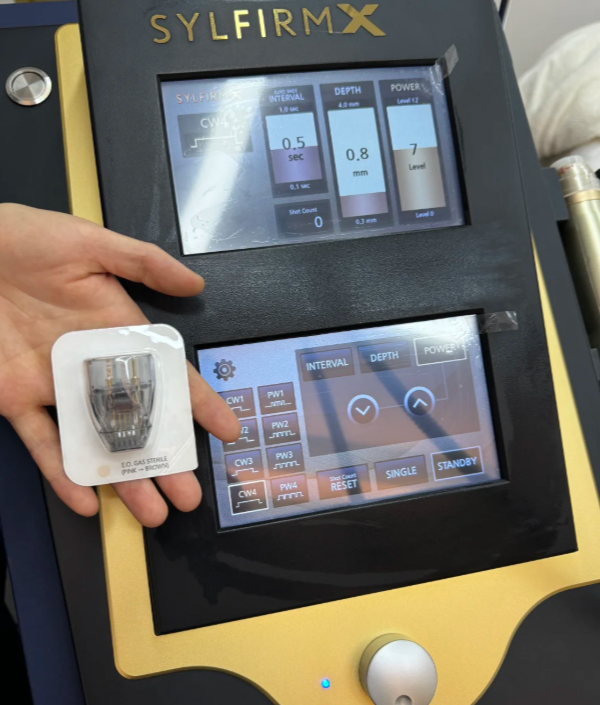
I. What exactly is Obsidian Dual Wave doing? Understand it first to avoid unnecessary panic.
The Obsidian Dual Wave is actually the Sylfirm X – a Potenza device that combines both “Pulse Wave PW” and “Continuous Wave CW” technologies. In simple terms, it uses ultra-fine needles to deliver radio frequency energy deep into the dermis, thereby stimulating collagen production and tightening of the skin. The PW mode is milder and suitable for addressing issues such as sensitive skin, redness, and spots; meanwhile, the CW mode delivers continuous energy output, offering more noticeable results in reducing skin laxity, fine lines, and Pores.
Many people get confused between Potenza and traditional roller microneedling. Traditional roller microneedling involves physical skin penetration, relying mainly on the body’s wound-repair response. On the other hand, the Obsidian Dual Wave technique combines “needles with radio waves,” delivering not only mechanical stimulation but also thermal contraction. As a result, there’s a noticeable tightening sensation after the treatment—this is normal and not a sign that the face is sagging.
Why do some people think “doing too much will lead to collapse”?
- Confusing the temporary swelling after surgery with collagen loss leads to the misconception that the face has become sunken.
- If treatments are performed too frequently in a short period of time, the skin doesn’t have time to recover before being exposed to heat again, which weakens its barrier function and results in a less elastic appearance.
- Expectations were way too high—thinking that just three sessions would turn a sagging face into a firm one. When the results fell short, they assumed it was a problem with the machine.
II. Why did I decide to do the Obsidian Dual Wave treatment three times in a row? Let me start by talking about my skin condition and goals.
I have combination skin that tends to be oily, with Pores concentrated on both cheeks. My T-zone gets red easily, and as I’ve gotten older, the area above my Nasolabial Fold Correction has started to sag a bit.
I tried the Obsidian Dual Wave treatment for the first time with a “give it a shot” attitude, simply aiming to improve my Pores.
It wasn’t until the redness was noticeably less on the second try that I seriously started figuring out how to schedule the third one.
The third treatment is aimed at maintaining the overall quality of the skin. My goal has never been “lifting,” but rather “stabilizing the skin texture, reducing Pores, and giving the face a cleaner appearance.”
Let’s set the record straight right from the start: the Obsidian Dual Wave is not a lifting device. If your face is already noticeably sagging, with excess flesh around the mouth and a blurred jawline, relying solely on the Obsidian Dual Wave will likely not yield significant results—you might need to combine it with the Ulthrea, Sofwave, or thread lifting for noticeable changes. Set realistic expectations so you won’t feel disappointed after just three sessions.
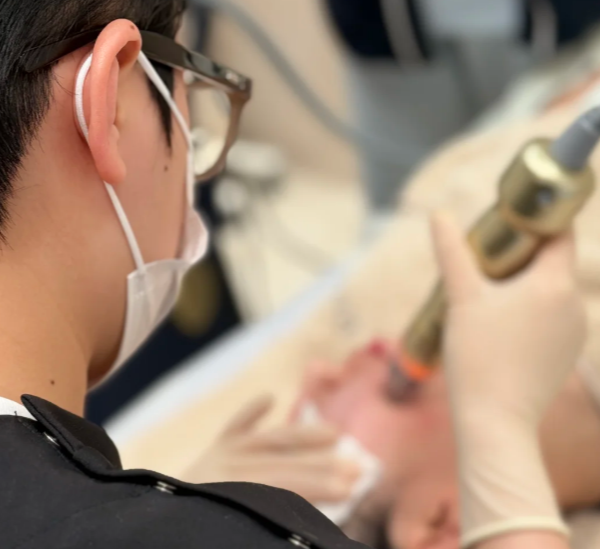
III. The actual time line for 3 sessions of Obsidian Dual-Wave Gold Microneedling: intervals between sessions and changes in skin condition
The interval between my three treatments was about four to five weeks, which is the minimum recovery period recommended by doctors. My face turned very red on the day of the first treatment, similar to sunburn, and the redness started to subside by the third day. For the second treatment, the swelling decreased significantly, reducing the recovery time to just two days. By the third treatment, there was almost no noticeable swelling, only slight redness, allowing me to wear makeup the next day. Here are the key changes after each treatment:
Three Transformation Comparisons
- The first step focuses on “testing skin tolerance,” with redness and uneven skin tone improving first.
- Starting from the second time, you enter the “skin quality optimization phase,” during which changes in Pores and fine lines become more noticeable.
- The third approach leans toward “stabilization,” resulting in stable and radiant skin overall, with a shortened recovery period.
| Number of times | Main Impressions | Recovery period | Significant improvement |
|---|---|---|---|
| for the first time | Significant swelling with a tight feeling on the face | About 3–5 days | Redness and uneven skin tone |
| The second time | Heat and tightness are the main sensations. | About 2–3 days | Pores, fine lines |
| Third time | Slight redness, almost no swelling | About 1–2 days | Overall skin texture remains stable and radiant |
Personally, I think the first treatment serves as a foundation, the second one starts to show changes in skin quality, and the third one is for maintaining those results. If you expect your face to become firmer after just one treatment, you might be disappointed; but with three sessions in total, the effects do accumulate over time. This is also why many clinics in South Korea market the Obsidian Dual Wave treatment as a “three-session package.”
Check out real reviews and photos of Dermatology clinics in South Korea →
IV. Can overuse of Obsidian Dual-Wave Gold Microneedling cause sagging skin? It depends on these three factors
Returning to the most frequently asked question. My answer is: it won’t collapse under normal use, but improper handling or unrealistic expectations can make you feel like it has collapsed. To determine whether it will collapse, focus on three key factors: energy, density, and interval.
1. Higher energy isn’t always better.
- Too high an energy level and too deep penetration can cause excessive thermal damage, destroying the collagen before it has a chance to regenerate.
- Asians generally have thinner skin, so it’s best to be more cautious around the cheekbones and eye area—avoid blindly following Western standards.
- A good doctor will adjust the treatment based on your skin condition that day, rather than sticking strictly to a preset energy level.
2. Too high a density prevents the skin from repairing itself in time
- Applying it too many times in the same area may feel tight at first, but over time it can damage the skin barrier.
- It’s recommended to keep the total number of hairs on the entire face within a reasonable range, rather than piling them on endlessly just to “enhance” the appearance.
- Avoid other laser or acid treatments for two weeks after the procedure to give the skin adequate time to heal.
3. The time interval is a minimum requirement, not just a suggestion.
- With ANEW Dual Waves, the skin goes through a cycle of “inflammation—recovery—collagen regeneration,” a process that takes at least three weeks.
- With intervals of less than three weeks between sessions, the skin may still be inflamed when exposed to heat, causing it to thin out further with each treatment.
- For those with sensitive skin, rosacea, or already weakened skin barriers, it’s recommended to extend the interval to six to eight weeks.

V. Who ends up feeling like their face has “sagged” after getting the treatment?
From my observations, I find that people with sagging faces usually don’t actually have their collagen “destroyed” by injections. Instead, it’s due to one of the following reasons. Once you understand these, you’ll realize that in many cases it’s just a misunderstanding, but there are also situations where injections simply aren’t suitable.
Common causes of the “collapsed face” appearance
- The “disparity” after post-surgery swelling subsides: The face remains slightly swollen within a week after the procedure, and once the swelling goes away, it seems as though the face has become sunken.
- Thin fat layer and sunken cheeks: Microneedling targets the dermis and does not add fat, so it may actually accentuate the sunken areas after treatment.
- Inadequate post-surgery moisturization and sun protection: Dryness can make the skin look rough, deepen wrinkles, and give it a saggy appearance.
- Doing too many treatments at once—obsidian dual-wave with acids, lasers, and threads—puts excessive strain on the skin in a short period of time.
If you already have naturally sunken cheeks with little subcutaneous fat, it’s recommended to discuss with your doctor first whether the procedure is necessary and whether you should use a lower energy setting. The Obsidian Dual Wave treatment can improve skin quality, but it won’t turn your sunken face into a plumper one—so be sure to set aside any such expectations.
VI. Smart Scheduling for 3 Consecutive Treatments and Post-Procedure Care
If you’re determined to do multiple treatments in a row, my advice is “it’s better to space them out rather than rushing through them.” The table below shows a more cautious schedule I’ve put together for your reference:
It’s recommended to schedule it 3 times in a row.
- Use the milder mode for the first time to observe the skin’s reaction and recovery speed.
- The second session is scheduled four to six weeks later, with a higher-energy mode can be added depending on the situation.
- The third session is scheduled six to eight weeks later for a routine maintenance treatment, after which the interval between maintenance sessions can be extended.
| Project | Recommended approach | Important Notes |
|---|---|---|
| for the first time | Primarily in PW mode to test tolerance | After the procedure, focus on hydration and sun protection. |
| The second time | Every 4–6 weeks, the CW mode can be added. | Avoid the week before and after your period to reduce sensitivity. |
| Third time | Perform a routine maintenance cleaning every 6–8 weeks | Avoid other laser treatments within two weeks after the procedure |
Three Key Principles for Post-Procedure Care
- Ensure adequate hydration: Apply a simple moisturizing mask or serum daily for the first week after the procedure, avoiding products containing alcohol or fragrances.
- Make sure to use adequate sun protection: Focus on physical barriers like hats, masks, and umbrellas during the first three days, then add sunscreen after that.
- Avoid touching your face or picking at scabs: Tiny wounds form after microneedling, and scratching due to itching can easily lead to discoloration or inflammation.
Going to South Korea for medical aesthetics for the first time? BeautsGO makes booking in Chinese hassle-free →
VII. FAQ: The Three Most Frequently Asked Questions
Q1: Can the Obsidian Dual Wave and Ulthrea be used together?
- Sure, but it’s not recommended to do them on the same day. Both are thermal therapy treatments, and it would put too much strain on the skin.
- The common approach is to use HIFU for lifting first, followed by Obsidian Dual-Wave treatment four to six weeks later to improve skin quality, or vice versa.
- The specific order should be determined by the doctor—don’t arrange it on your own.
Q2: How many sessions are needed before I can stop? And how should I maintain the results afterward?
- It is generally recommended to complete three sessions as one treatment course, after which maintenance treatments can be done every three to six months.
- If your skin condition is stable and your budget is limited, one to two treatments per year will suffice.
- During the maintenance period, it can be combined with basic moisturizing treatments or low-energy lasers—there’s no need to use high-energy treatments every time.
Q3: Is it cheaper to get treatments in South Korea?
- The price per treatment in South Korea is usually lower than that in Taiwan and Hong Kong, but it also depends on the location of the clinic and the package options offered.
- Tours in Myeongdong and Gangnam cost more than those at neighborhood clinics, so it’s recommended to check reviews before making a reservation.
- Don’t just focus on price—doctor’s experience, post-op care, and communication skills are what really matter.
Conclusion: Black Obsidian Dual Waves isn’t a miracle solution, but it’s not the culprit behind ruined faces either.
After undergoing three sessions of the Obsidian Dual Wave treatment, my face didn’t sag, but I also didn’t end up with a “tighter, smaller face.” Its most noticeable effects are improved skin stability, smaller Pores, reduced redness, and a cleaner overall appearance. If you, like me, struggle with skin texture issues, three sessions are definitely worth considering; if your main concern is sagging skin, don’t expect the Obsidian Dual Wave to act as a miracle solution for lifting.
One final reminder: All medical beauty treatments carry risks, and the Obsidian Dual Wave is no exception. It’s far more important to consult a qualified doctor before undergoing the procedure, ensure the equipment is legitimate, and ask clearly about the energy level and number of pulses used. Proper moisturization and sun protection after treatment are just as crucial as reading various online reviews. If you want to know the price range for Obsidian Dual Wave treatments in South Korea, you can refer to the Price Breakdown for Obsidian Dual Wave. If you’re comparing it with other firming treatments—such as Sofwave versus Ulthrea, or understanding how Sofwave prices are calculated based on the number of pulses—these articles can help you make an informed decision. If you’re not familiar with the booking process in South Korea, take a look at How to Plan a Medical Beauty Trip in South Korea first. Doing your homework before visiting a clinic is also a good idea; articles like What You Need to Know Before Visiting Cleor Dermatology, How to Book an Appointment at Theia, and Real Reviews of Rezero in Busan can provide valuable insights. According to South Korean laws, treatments cannot be performed on individuals under 19 years old—check out the Two Strict Rules for Medical Beauty Treatments for Minors for more details.
⚠️ Disclaimer: This article is based on personal experience and compiled from public information, and does not constitute medical advice. Treatment outcomes and risks vary from person to person; be sure to consult a qualified physician and rely on the assessment provided at the clinic.