 By 變美體驗官
Let’s get to the conclusion first, so you don’t forget halfway through: the standard price for 600 shots is roughly between NT$35,000 and NT$60,000 (about KRW 1.5 million to 2.6 million). If the price is much lower than this range, it’s a red flag that warrants caution. As for extra shots being added or forced upselling—yes, it happens, but not every clinic does it, and in most cases it can be prevented in advance. Keep reading.

I. Real-world price check: How much is 600 doses really?
I reached out to 7 clinics for this consultation and compiled the quotes for 600 sessions (the standard amount for a full-face Thermage FLX treatment) in the table below. Keep in mind that these are the “on-site per-session prices,” without any package deals or first-client discounts.
| Region / Clinic Type | On-site quote for 600 units (KRW) | Approximately ANEW dollars | Notes |
|---|---|---|---|
| Large-scale chains in Gangnam | 2.2 million to 2.6 million | Around 52,000 to 62,000 | Includes doctor-led procedures and original probes |
| Mid-sized Clinics in Hongdae/Itaewon | 1.8 million to 2.2 million | Around 43,000 to 52,000 | First-time consultations often come with 10% off. |
| Yeouido / Office-Based Clinic | 1.6 million to 2 million | Around 38,000 to 48,000 | It’s better to schedule it during lunch break. |
| Influencer Discount Groups (Agency Promotion) | 990,000 to 1.3 million | Around 24,000 to 31,000 | Marked as “special offer” but with vague details |
Is that last option at 990,000 really tempting? I was tempted too at first. But after asking further, I found out that price is usually an introductory rate that doesn’t include the basic energy from the probe—in reality, the cost almost always rises to 900 or even 1,200 per session before it becomes “worth it.” This is exactly the upselling tactic we’ll be discussing next. For this reason, when the price is under 1.5 million at 600 per session, it’s advisable to clarify three things first: whether the probe is brand new and sealed, whether the number of sessions is specified in the treatment plan, and whether the procedure will be performed by the doctor personally.
II. Why can the prices differ by a factor of two?
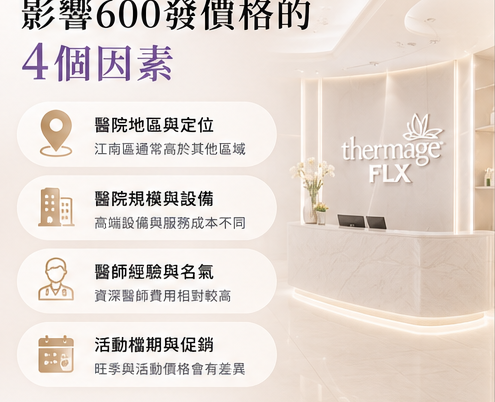
It also says “Phoenix Radio Wave 600 units,” but the cost structure varies significantly, with four main components:
- Probe cost: Original one-time-use probes are priced per use, and there’s no way around that. When reusable or counterfeit probes are used, the cost can be cut in half or more.
- Doctor vs Nurse: At legitimate clinics, procedures are performed by doctors, while some low-cost packages are done by nurses or interns—so the costs naturally vary.
- Machine model: FLX (4th generation). The energy output and comfort level of the FLX are vastly superior to those of the older CPT models, and some clinics mislabel older units as newer ones.
- Traffic generation strategy: Low prices are only used to attract customers in; profits come from additional purchases and upsells on the spot, so the listed price can be kept very low.
So a low price isn’t necessarily a scam, but when it’s “unreasonably low,” it usually means something has been manipulated in one of those areas. This isn’t just speculation—it’s based on actual inquiries I’ve made.
III. Does fake order stuffing really happen?
Yes, but not as “sly” as you think. The common tactics are these:
- Areas skipped: Dense coverage on the cheeks, light touch on the Forehead and chin. The total number of hairs seems sufficient, but the distribution is uneven.
- Repeated tapping: Tapping the same small area back and forth — the machine’s counter keeps rising, but in reality it’s just a waste of effort on areas that have already been treated.
- Reduced time: What normally takes 40–60 minutes for 600 shots can be done in just 15 minutes — chances are the dosage wasn’t sufficient.
- Old unit passed off as new: The probe counting logic of CPT is different, and it’s being used to fake FLX readings.
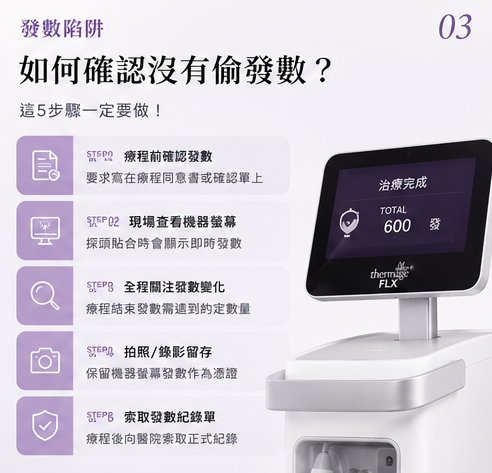
How can you tell? There are three things you can check right away: ① Before treatment, ask to see the serial number and seal on the probe’s packaging; ② The machine’s screen will display the cumulative usage count—keep an eye on it until it reaches 600; ③ If the time taken seems significantly too short, ask questions on the spot. Reputable clinics will happily show you all three of these details, so be cautious if they try to evade your questions.
IV. Can You Avoid the Aggressive Upselling?
To be fair: upgrading the treatment plan doesn’t necessarily mean you’re being ripped off. If it’s discovered on-site that your cheeks are extremely sagging and the doctor recommends adding more sessions or using an HIFU device, that’s actually professional advice. What you really need to watch out for are situations where expensive options are pushed without checking your skin condition first, or when people are lured in with low prices only to be pressured into paying more later.
After doing some real research, the difference between legitimate clinics and scammy shops is quite clear:
| Context | Reputable Clinic | Stores to Be Cautious About |
|---|---|---|
| You said your budget is limited | Respect your budget – here’s a plan for 600 units | “600 doesn’t work anymore” – they insist on 1200. |
| You refused to add to cart | Okay, no more hassle. | Keep nagging and offering discounts to try to keep them. |
| Quotation sheet | Specify the number of shots, probe, and operator | Just write “One radio wave” and gloss over it vaguely |
So it’s not scary to be pushed into making a decision — what’s really scary is letting emotions and manipulation drive your choices, only to realize something’s off afterward. In the next section, I’ll share some quick responses you can use right away.
V. On-site Investigation: How to Ask Questions Without Getting Scammed
These are the questions I actually used during this trip, and the other party answered them honestly—just copy them as is:
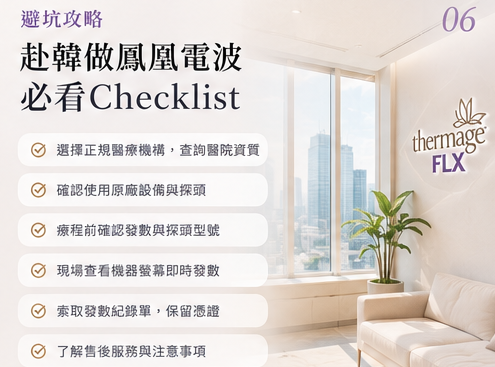
- “Are the 600 units the original ANEW FLX new probes? Can I see the packaging on the spot?”
- “The machine will show the cumulative count. Can I watch it reach 600?”
- “Is it performed by the doctor personally or by a nurse?”
- “If I only do 600 shots without upgrading the package, will you still perform the full treatment as usual?”
If the other party responds naturally and is willing to cooperate, there’s usually no problem. If they hesitate, change the subject, or even say you “don’t understand,” you should be aware of that.
VI. Is 600 shots really enough? Don’t let the numbers dictate you
It’s not the case that more injections are always better—your skin’s base condition matters most.
- Ages 25–32: Easy maintenance – 600 units are just enough for the whole face to prevent sagging.
- Ages 33–40, when sagging begins to show: 600 units is a basic starting point, with many opting for 900 units to enhance facial contours.
- For those over 40 with noticeable sagging: 600 shots alone may not be sufficient; usually, HIFU or additional shots are needed.
So there’s no fixed answer to the question of “Is 600 sessions enough?” What matters is whether the clinic is honest enough to tell you that “for your condition, 600 sessions might not be sufficient,” rather than claiming outright that “600 sessions will guarantee perfect results.”

VII. Avoiding Scams on the Day + Common Questions
Q: Do I definitely have to avoid low-cost packages?
N
ot necessarily, but you need to be prepared for the possibility of a price increase on site. If your budget is tight and you don’t want any hassle, it’s better to choose a well-rated mid-sized clinic with transparent pricing and a comfortable experience.
Q: How can I confirm the number of injections if I
don’t speak Korean?
You can show those four questions to them using a translation app, or book through a platform like BeautsGO that offers Chinese-speaking customer service — someone will help you confirm it on site.
Q: Is it cost-effective to go to South Korea for cosmeti
c procedures?
When including flight costs and accommodation, it might not be cheaper than getting treatments in Taiwan or Hong Kong, China. However, there are more options available, and the doctors there have extensive experience. Whether it’s worth it depends on whether you can find a reputable clinic.
Conclusion
After doing some research, my honest take is quite simple: It’s not that you can’t go to Phoenix Radio Wave in South Korea for 600 sessions, nor are there scams everywhere. What causes confusion is actually “information asymmetry.” Keep in mind that 1.5 million Korean won (about 35,000 New Taiwan dollars) serves as a benchmark price. If it’s significantly lower, ask three things first. There are clear signs of undercounting sessions or up-selling services—by checking the devices on site, monitoring the number of sessions, and knowing how to say no, you can avoid most issues. Instead of worrying about being cheated, choose a clinic with transparent reviews and clear pricing from the start—that’s the real way to save hassle.
The above are my observations from actually going through this experience, meant as a reference for you—the final decision still rests with you.