 By 變美體驗官
In South Korea, the cost of Thermage FLX treatment ranges from TWD 20,000 to 80,000—a difference of four times! You’re probably wondering: Is the price really lower in South Korea? Or is there something fishy about those cheaper options?
In this article, we’ll break down Phoenix Radio’s pricing strategy—identifying which discounts are truly affordable and which come at the cost of cutting out essential features. After reading it, you’ll know exactly how to make a choice without letting low prices cloud your judgment.
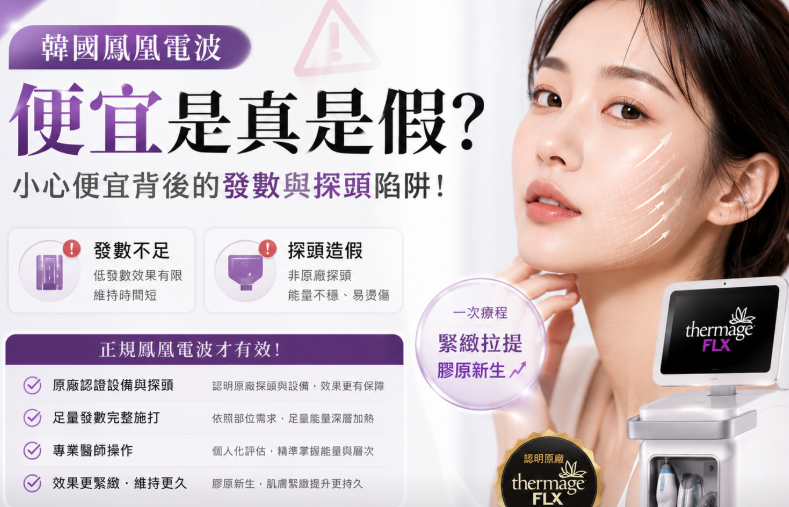
I. What exactly is Phoenix Radio? Understand that first before discussing the price.
The scientific name for Thermage is Thermage. The latest version available on the market is called Thermage FLX (4th generation), which is a type of monopolar RF tightening device. The mechanism is quite simple: it uses RF energy to heat the dermal layer, stimulating Collagen to contract and reorganize, thereby achieving a tightening and lifting effect.
Its biggest advantage is the ability to treat the entire face in just one session. Unlike HIFU, which can only target specific layers, the Phoenix radio wave therapy covers a much wider area. There’s also no need for a recovery period—patients can go out right after the treatment. This is precisely why it remains so popular in South Korea’s medical aesthetics market.
But here’s the problem—when a treatment offers great results and there’s high demand, some people start to get greedy. Cutting corners and attracting customers with low prices is nothing unusual in South Korea’s local market.
II. The Reasonable Price Range for Phoenix Radio in South Korea
Let me give you a baseline first, so you’ll have a clear idea in mind whenever you see any quotes:
| Project | Regular Price (KRW) | Regular price (approx. TWD) | Abnormally low price |
|---|---|---|---|
| Full face: 600 shots (standard) | 1.5 million – 2.5 million | 35,000–58,000 | Under 800,000 |
| Full face: 900 shots (including neck) | 2 million – 3.2 million | 46,000–74,000 | Under 1.2 million |
| Full face: 1,200 shots (including eye area) | 2.8 million–4 million | 65,000–93,000 | Under 1.8 million |
| Local: 300 shots | 800,000–1.5 million | 19,000–35,000 | Under 400,000 |
Note: The figures above represent typical price ranges for full-face treatments in the Seoul area of South Korea from 2025 to 2026. Prices may vary among different clinics, but these ranges give you a good general idea. If you come across an offer of 600,000 won or less (around 18,000 New Taiwan dollars) for a full-face treatment, that’s a red flag.
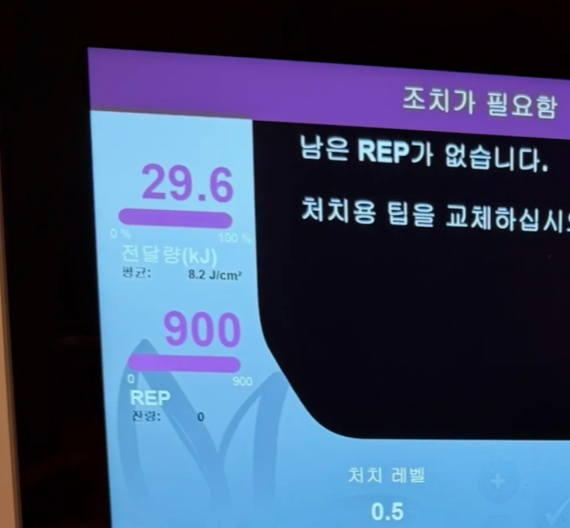
III. Low-price trap No. 1: Cutting corners in product quantity
This is the most common—and hardest-to-spot—pitfall.
Phoenix Radio charges based on the number of “shots” used. A standard full-face treatment includes 600 shots, but even though you pay for 600 shots, you might actually only receive 400 or even 300 shots. Why? Because for every additional 100 shots, the lifespan of the probe is reduced, increasing the cost for the clinic.
You might say, “How am I supposed to know how many shots were given?” Indeed, you can’t see the counter on the device during the treatment, and many people getting their first Phoenix Radio therapy session have no idea what the standard procedure entails.
There’s another trick: the clinic might tell you “600 shots for the whole face,” but what they’re actually using is the “repetition mode” — shooting multiple times at the same spot just to reach the required count. In this way, the required number of shots is met, but the coverage area isn’t sufficient, resulting in just as poor outcomes.
IV. Low-price trap No. 2: Substandard probes passed off as high-quality ones
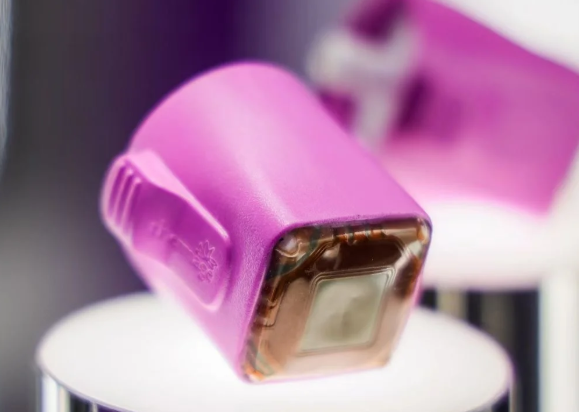
The tips for the Phoenix Wave device are disposable, with each tip having a fixed maximum number of pulses it can emit. Original manufacturer tips cost around $800–1,200 (approximately NT$25,000–38,000), and this is a fixed cost that cannot be reduced.
There are several procedures offered at low-cost clinics:
1. Use non-original probes. There are counterfeit probes on the market that look almost identical to the original ones, but their energy output is unstable, resulting in much poorer performance. Original machines can detect the probe serial number, but some older models or cracked versions cannot.
2. Reusing probes. Theoretically, a probe should only be used by one person, but some clinics “reset” the probe after it’s been used by a previous client and then use it again. This results in a significant drop in energy output, as well as health risks.
3. Use older models. Thermage is currently available in two versions: CPT (third generation) and FLX (fourth generation). The FLX version is faster, more comfortable, and delivers more even results. Some clinics advertise as offering “Thermage” treatments but actually use the older CPT model while charging the price of FLX—or they attract clients with lower prices; either way, you won’t be able to tell the difference.
V. Low-price trap No. 3: Other pitfalls you might be overlooking
Besides radiofrequency and probes, there are a few other common methods used by low-cost clinics:
1. The operator is not a doctor. South Korea’s laws require that laser treatments in the medical aesthetics sector must be performed by doctors, but in reality, many clinics have nurses or beauticians carry out these procedures instead. While having a non-doctor perform the treatment doesn’t necessarily mean problems will arise, their ability to determine the appropriate energy levels and focus on key areas is far inferior to that of experienced doctors.
2. The pre-treatment consultation is merely a formality. For a proper Phoenix Radio Wave therapy treatment, the doctor will first assess the degree of skin sagging, fat distribution, and sensitive areas before tailoring the appropriate energy level and treatment method. Cheap clinics often just start treating right away—the consultation is over in just ten minutes, leaving no time at all to develop a personalized plan.
3. Hidden extra costs. The low price is only the starting rate. Once you arrive, they’ll tell you things like “this price doesn’t include anesthesia,” “an upgraded probe costs extra,” or “post-surgery care is charged separately.” In the end, it turns out to be more expensive than the regular price.
4. Fake devices. In the most extreme cases, the entire device is a counterfeit. Its exterior looks exactly like that of Thermage, but it doesn’t contain any RF system at all. Such incidents have indeed occurred in South Korea, with the Ministry of Food and Drug Safety (MFDS) seizing batches of these fake products every year.
VI. So how exactly do you choose something reliable?
I’ve mentioned so many pitfalls not to discourage you from getting a Phoenix Radio treatment, but to help you know how to make the right choice. If a clinic meets the following criteria, it’s generally reliable:
Here’s another practical tip: ask the clinic to write “Thermage FLX, 600 shots, original probe” on the treatment form and stamp it. If they refuse, you know what to expect.
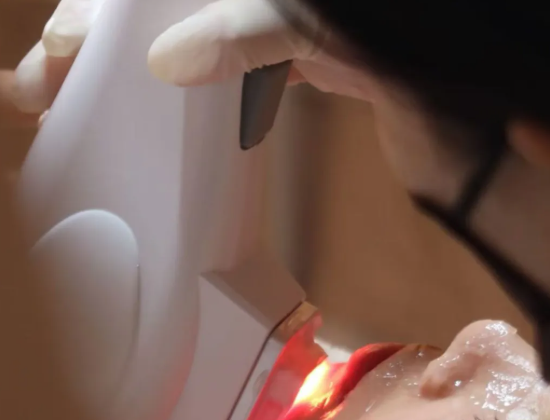
VII. South Korea’s Phoenix Radio Waves vs. Local Treatments in Taiwan – Where Should You Go?
Many people struggle with deciding whether to fly all the way to South Korea for a phoenix radio wave treatment. Objectively speaking, prices in South Korea are indeed lower than those in Taiwan—while a full-face treatment in Taiwan usually costs between NT$60,000 and NT$100,000, a reasonable price in South Korea ranges from NT$35,000 to NT$58,000. The difference is more than enough to cover flight and accommodation expenses.
But only if you choose a reputable clinic. If you go for the cheap option—those clinics that offer a “full face treatment for just 600 NT dollars at 15,000 NT dollars”—you might end up losing all the money you saved, and the results might not even be as good as getting the treatment in Taiwan.
| Comparison Items | South Korea (licensed clinics) | Taiwan |
|---|---|---|
| Full face: Starting at 600 shots | NT$35,000–58,000 | NT$60,000–100,000 |
| Model | Most have upgraded to FLX | FLX is the main one |
| Doctor’s Experience | Large number of cases, extensive experience | Just as professional |
| Language Communication | Need translation or looking for a Chinese-speaking clinic | Accessible |
| Post-operative follow-up | It’s harder after returning to Taiwan | Easy follow-up visits |
| Additional costs | Flights + Accommodation + Time | None |
So the conclusion is clear: if you’re already planning to visit South Korea or want to undergo multiple procedures there, getting the Phoenix Radio treatment in South Korea is a cost-effective option. But if you’re only doing the Phoenix Radio treatment, the total cost—including flights and accommodation—may not be much cheaper than in Taiwan. Plus, you need to choose the right clinic, otherwise your trip will be a waste of time.

VIII. 6 Questions You Must Ask Before Getting a Phoenix Radio Wave Treatment
No matter which clinic you choose in the end, asking these 6 questions during your in-person consultation can help you avoid 90% of pitfalls:
- “May I ask if it’s the FLX or CPT model?” — Make sure it’s the latest fourth-generation version.
- “Can I open the probe in person?” — There’s basically no way they’ll say yes to that.
- “What’s the number of sessions? Which areas are included?” — Write this down on the treatment form.
- “Is it performed by a doctor in person?” — Confirming the identity of the practitioner.
- “Does the quote include anesthesia and post-operative care?” — Avoid hidden extra charges.
- “Does it have FDA or MFDS certification?” — All legitimate clinics definitely do.
IX. Common Questions & Answers about Phoenix Radio Waves
Q: How long does it take for the effects of Phoenix
Radio Wave treatment to show?
A:You’ll experience immediate firming right after the procedure (as the Collagen contracts when heated), but the peak effect occurs 2–6 months later, as it takes time for the Collagen to regenerate. The results can last 1–2 years, depending on individual metabolism and maintenance habits.
Q: Is the FLX treatment painful?
A:The
FLX model is much more comfortable than older versions, but you may still feel noticeable warmth in areas where the bones are prominent, such as the Forehead and chin. Most clinics offer topical anesthesia or cooling sprays. If you’re worried about pain, look for clinics that provide a “vibration mode.”
Q: Does a low price necessarily mean poor
quality?
A: Not necessarily. Some clinics offer promotions, opening discounts, or off-peak deals, which can result in lower prices than usual. But if the price is “more than 50% below market rate,” you should be cautious—under normal business logic, no one would operate at a loss.
Q: Can I fly back to Taiwan right after the Phoenix Radio treatment?
A: Yes. There’s no
recovery period for the Phoenix Radio treatment—you can resume normal activities on the same day. A few people may experience mild redness, which fades within a few hours. It’s recommended to strengthen moisturization and sun protection after the treatment, and don’t forget to apply sunscreen while on the plane.
Q: Which is better, Afor radio waves or HIFU?
A: The two work at different depths. Afor radio waves focus on tightening the dermal layer and cover a larger area, while HIFU (Ultherapy / Ultraformer) targets the SMAS fascia layer for more targeted lifting effects. Many clinics in South Korea recommend using both together to achieve enhanced results. If your budget is limited, choose one depending on whether you need overall tightening or localized lifting.
Conclusion
Is it true that radiofrequency treatments in South Korea are cheap? The answer is: It’s true that they’re reasonably affordable, but prices that are outrageously low definitely indicate something is off. By checking these four factors—probe cost, energy output standards, machine model, and doctor qualifications—you can avoid falling into pitfalls.
Instead of spending time comparing prices on various forums or reading ads, it’s better to go straight to reputable platforms where you can find genuine reviews and actual prices. If you choose the right clinic, the results from Phoenix Wave are well worth it; if you pick the wrong one, even the cheapest price is just a waste of money.
Remember: it’s not that “cheap things are of poor quality,” but rather that “anything significantly cheaper than cost definitely has something fishy about it.” Save this article and refer to it before your next appointment — that way you’ll be confident.