 By 變美體驗官
【30-Second Answer】In South Korea’s Dermatology clinics, Sofwave treatments can’t be priced simply based on “how much for the whole face.” Instead, fees are charged by the number of sessions: 100 sessions, 300 sessions, or 600 sessions. Different numbers of sessions cover varying areas of the face, deliver different levels of energy, and are suitable for distinct facial shapes. 100 sessions might only be enough to treat the jawline or minor fine lines, while 300 to 600 sessions constitute a basic full-face treatment package. Before asking for a quote, it’s essential to determine exactly how many sessions you need, which areas to treat, and how long the results will last—only then can you get a meaningful comparison of prices.
I. Why isn’t Sofwave treatment priced as a “full-face package” in South Korea?
Many people who visit a Dermatology clinic in South Korea for the first time to inquire about Sofwave start by asking, “How much is it for the whole face?” While there’s nothing wrong with this question, Sofwave isn’t priced based on a vague concept like “the whole face.” Instead, it’s calculated based on the number of sessions—meaning the actual number of energy points applied to the face by the device.
Different numbers of hairs mean different costs and varying levels of results. If a clinic only quotes a “full face price,” it’s likely that they’re presenting a fixed package of hairs as a generic rate — you have no way of knowing exactly how many hairs you’re getting.
1. It’s essentially charged based on energy consumption.
- Machine consumable costs determine the bottom price: Sofwave probes have a limited lifespan and number of uses. Hospitals calculate their procurement costs based on the number of uses, meaning lower-priced packages often involve reduced usage or having different operators perform the procedures.
- The doctor’s operation time is also a cost factor: for the same face, the operation time might double between 300 and 600 injections, and both labor and facility costs are reflected in the quote.
- Energy cannot be applied indefinitely: the skin has a limit to what it can handle. Using too much energy at once isn’t necessarily better—it may instead increase the risk of swelling, burns, or a longer recovery time.
2. Everyone’s face size and degree of sagging vary.
- Face size directly affects the number of hairs needed: People with smaller faces and those with larger faces require different amounts of coverage for a “full face” treatment, resulting in a significant difference in the number of hairs used.
- The distribution varies depending on the areas that are sagging: those with deep Nasolabial Fold Correction, a long chin line, or numerous fine lines around the eyes require different hair density for each area.
- A fixed price doesn’t account for individual differences: a “full-face price” might be wasteful for those with smaller faces or insufficient for those with larger faces—this is why quoting based on the number of hairs is a more reasonable approach.
3. Different areas naturally require different numbers of grafts.
- Thin skin around the eyes with low hair density: The skin around the eyes is delicate and highly sensitive, so many hairs aren’t necessary—precision matters more than quantity.
- The highest density is needed from the Nasolabial Fold Correction to the corners of the mouth—this area shows signs of aging most easily and typically requires a higher density of implants for support.
- The lower jaw line needs to balance contour definition with safety: it should enhance the facial contours while preventing overheating in the bone area, with the distribution of energy applied based entirely on the doctor’s judgment.
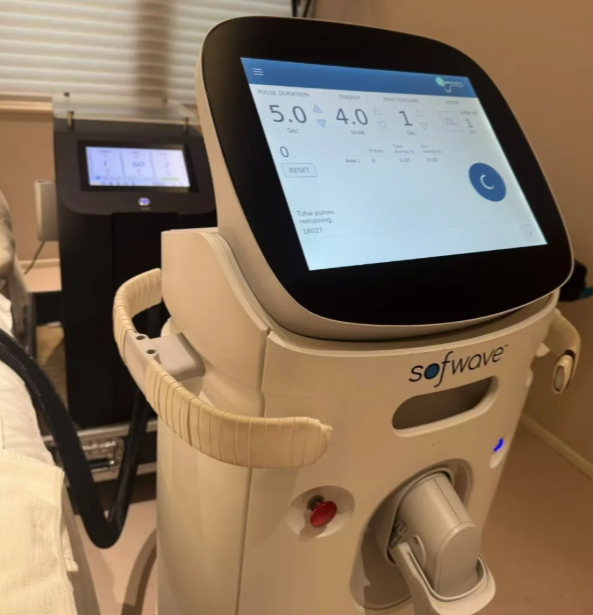
II. How many treatments can each pack of Sofwave—100, 300, and 600 shots—cover?
The most common questions during consultations are, “Is 100 sessions too few?” and “Is 600 sessions too many?” The answer depends on which area you want to improve. The table below isn’t an absolute standard, but it can help you quickly determine the right direction.
| Send count | Approximate coverage area | Who is it for | Things to keep in mind |
|---|---|---|---|
| 100 shots | Single treatment area, such as one side of the lower jawline, Forehead, or Nasolabial Fold Correction area | Want to give it a try and improve just a small area | The effects are limited; don’t expect a full-face lifting effect. |
| 200–300 shots | Basic half-face to full-face treatments – common combinations: Forehead + eye area + chin line | Small face shape, early signs of aging | Make sure to clarify how the quotas will be allocated |
| 400–600 shots | Full face + neck or full face high-density layering | Large face shape with noticeable sagging | The price is high; you need to confirm the doctor’s design plan first. |
| Over 600 posts | Full face + neck + chest, or multiple treatments in sequence | Older age with severe sagging | It’s not recommended to get too many injections at once; doing it in smaller doses is safer. |
1. 100 shots: A trial application for specific areas, not the whole face
- 100 units are only sufficient for targeted enhancement: for example, if you want a tighter jawline or more noticeable fine lines on the Forehead while other areas are fine, 100 units can be used for spot-specific reinforcement.
- You’ll be disappointed with full-face lifting: Using 100 units for a full-face lift will yield very limited results—you might even feel like you’ve gotten nothing out of it.
- Often packaged as a low-cost experience to attract customers: Some clinics list the price at 100 as an introductory rate, luring you in before suggesting additional full-face treatment packages.
2. 300 shots: The most common starter pack for full-face treatments
- 300 shots provide basic coverage for the entire face: It usually covers the Forehead, eye area, Nasolabial Fold Correction, and down to the jawline. You’ll notice an improvement in firmness right after just one treatment.
- The distribution ratio of shots is more important than the total count: if all 300 shots are focused on the upper half, the lower half won’t see any effect; while even distribution might result in too thin coverage in each area.
- When asking for a price, ask about “how it’s allocated”: Don’t just focus on “how much for 300 shots”; instead, inquire “how will these 300 shots be distributed?”
3. 600 shots: High density or full face + neck
- 600 shots are ideal for the whole face + neck or for high density: suitable for those with a larger face, noticeable sagging, who want to complete the treatment in one session, or who wish to treat the neck and chest as well.
- It’s not recommended to get this much done in one session—applying too much at once means the skin and underlying tissues will take longer to recover, increasing the risk of post-procedure redness and discoloration.
- It’s safer to do it in two sessions: Many Dermatology clinics in South Korea recommend splitting the 600 shots into two treatments rather than injecting them all at once.
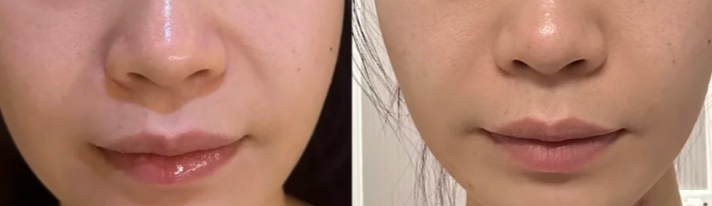
III. Pricing Insights for Sofwave in South Korea’s Dermatology Sector
The price lists for Dermatology services in South Korea are never clearly marked like those on supermarket shelves, as each person’s treatment plan is different. You can understand the quote using this structure: basic equipment fee + cost per session × number of sessions + anesthesia/post-procedure care fee. What really determines how much you’ll have to pay is the “number of sessions” mentioned in the middle.
| Package Types | Common frequency range | For reference only | Key points for price comparison |
|---|---|---|---|
| Localized Experience | Under 100 shots | Enhanced in a single area | Ask if design and anesthesia are included |
| Full Face Foundation Treatment | 200–300 shots | My First Experience with Full-Face Firming Treatment | Confirm the number allocation and doctors |
| Advanced Full Face Treatment | 400–600 shots | Full face + neck or high density | Check the average price per treatment and additional fees |
| Event Packages | It varies | Pair with other treatments | Be careful to avoid bundling unnecessary items. |
1. Prices aren’t fixed—check out current promotions and exchange rates first.
- South Korea’s hospitals often hold anniversary celebrations and promotions for new patients: prices fluctuate depending on off-peak sales and new customer offers, with significant differences from one month to another.
- Exchange rates affect actual costs: The amount of RMB or New Taiwan Dollars you actually pay will fluctuate depending on the exchange rate.
- Don’t use old prices as a benchmark: The price your friend paid last month might not apply today. You should compare it with the current quote and your own plan.
2. A package with a higher average price per treatment isn’t necessarily more expensive.
- The average price per unit is more meaningful than the total price: 300 units are sold for 900,000 KRW, giving an average price of 3,000 KRW per unit; 600 units are sold for 1.5 million KRW, resulting in an average price of 2,500 KRW per unit.
- The number of injections depends on whether they’re placed in the right areas: rather than using 200 out of 600 injections on a Forehead that isn’t sagging, it’s better to concentrate 300 injections on the Nasolabial Fold Correction and the lower jaw line.
- Treatment planning is more important than the unit price: the average cost per treatment is just a reference—what truly matters is how the doctor designs the coverage and density.
3. The hidden costs of low-price attraction packages
- Low prices often mean a reduced number of injections: low-cost packages with 100 or 200 injections may not be sufficient to produce noticeable results.
- The probe and time required for the procedure can be misrepresented: using unauthorized probes, shortening the procedure time, and charging separately for anesthesia are all common hidden costs.
- Buying more at the store costs more: You only realize you need to add items when you get there, and the final total might not be cheaper after all.

IV. 3 Reasons Why You Shouldn’t Ask for the Full-Face Price Right Away
Many people visiting South Korea for the first time, faced with language barriers and limited time, simply want to quickly know the cost of a full-face treatment so they can have a clear idea. However, asking this question at a Dermatology clinic in South Korea can easily lead to getting overcharged. Here are 3 practical reasons why.
1. The sales event defaults to recommending the most expensive package
- “The full-face price” is often equated with the most comprehensive package: once you ask about the full-face price, sales staff usually recommend the package with the highest number of treatments and the highest per-treatment cost.
- You might not even need that many injections at all: for example, if you’re only 30 and your face isn’t showing signs of aging, 300 injections are already sufficient, yet you’re still pressured to get 600.
- It’s safer to mention the specific area first rather than asking about the price right away: tell the clinic which part you’d like to improve, and let them suggest a treatment plan based on your condition. This way, it’s less likely that you’ll be led astray compared to simply asking for the price for a full face treatment.
2. The number of treatments suitable for you might differ from what the salesperson mentioned.
- Salespeople and doctors have different goals: salespeople aim to close deals, while doctors prioritize safety and results, so their starting points tend to vary.
- Only a doctor can determine how many units you need: it’s the doctor who truly needs to see your face to assess the degree of sagging.
- Have the doctor assess your situation before asking for a quote: Let the doctor or Chinese-speaking customer service understand your condition first, and then they can advise you on the appropriate number of sessions and treatment plan.
3. Low prices may hide other costs
- Cheap quotes often don’t include anesthesia or post-operative care: Some offers omit anesthetic ointment, post-op sedation, consultation in Chinese, and even cleansing and makeup removal.
- The costs are added up item by item once you arrive at the shop: after you sit down, all these fees are combined, and in the end it might even cost more than the “full-face price”.
- Ask about “what’s included”: When comparing prices, ask “What does this price include?” instead of just asking “How much is a full face treatment?”
V. How to make an appointment without getting caught in price tricks?
If you already have a general idea of wanting to get a Sofwave treatment, the next step isn’t to ask about prices right away — instead, do your research first. Doing these 3 things will help you understand the actual costs and avoid unexpected price hikes.
1. First, make sure there’s an authentic device available.
- Sofwave comes with official manufacturer certification: there’s a huge difference in performance and safety between genuine devices and counterfeit ones — this is non-negotiable.
- Ask the clinic for certification or photos: Before making an appointment, you can request the clinic to provide photos of the equipment or its original manufacturer’s certification.
- It’s more convenient to check through the platform: You can also use BeautsGO to see if a clinic offers Sofwave treatments and read customer reviews.
2. Send photos of the areas you want to improve to customer service.
- Provide your age and the areas you want to improve: Tell customer service your age, which areas you mainly want to address, and whether you’ve undergone similar treatments before.
- Have the customer service team help you estimate the number of units first: they can use their experience to determine roughly how many you’ll need, helping to avoid unwanted sales pressure once you arrive at the store.
- Hospitals can arrange suitable doctors in advance: By understanding your condition ahead of time, they can assign a more appropriate doctor for a consultation.
3. Ask about the number of grafts included, whether anesthesia is provided, and whether post-operative care is included.
- Confirm the number of units included: How many units are actually covered by this price, and how are they distributed?
- Confirm anesthesia and pain management: Check whether topical anesthetics, oral painkillers, or additional pain relief are included—those who are sensitive to pain should ask specifically.
- Confirm post-surgery care: Whether it includes post-op calming masks and repair treatments — these all affect the overall experience and price.
【Compare Prices & Check Equipment】First, determine which Dermatology clinic in South Korea offers genuine Sofwave devices. Whether the equipment is original and whether it receives regular maintenance directly affects both safety and treatment results. BeautsGO allows you to check clinics’ qualifications and service prices, so you can compare options from at least three different clinics before making an appointment: BeautsGO – Compare Prices for Dermatology Clinics in South Korea
Summary
Sofwave doesn’t offer a fixed “full-face price” since it charges based on the number of units used. The amount you need depends on your face size, degree of sagging, and the design chosen by your doctor. The difference between 100 units, 300 units, and 600 units isn’t just numerical—it affects coverage, energy density, and the overall results.
Next time you ask for a quote, don’t start by asking “How much is it for the whole face?” Instead, ask: “I’d like to improve my jawline and Nasolabial Fold Correction. How many sessions will I need roughly? Is anesthesia and post-treatment care included? How is the 300 sessions allocated?” By asking these three questions, the salesperson will immediately realize you’re not a complete beginner. Related articles: Sofwave vs Ulthrea – Which One Should You Choose? The Actual Price of Theia 2026, A Guide to Booking Treatments with Theia, The Good and Bad of Theia Treatments, Base Prices in Busan, and How to Book Appointments in Busan.
Disclaimer: This article is an objective informational piece based on public data and user experiences, and it does not constitute medical advice nor any recommendation or guarantee from a clinic. Actual results, level of discomfort, suitability, and prices are subject to the clinic’s on-site assessment and the pricing announced at the time of service. Cosmetic procedures carry risks, so please seek thorough consultation and assess your own health condition before undergoing any treatment. The prices mentioned herein are reference values in South Korean won; exchange rates fluctuate, so the final amount will be determined at the time of payment.