 By 變美體驗官
【30-Second Answer】Although both Sofwave and the Ulthera system use ultrasound to lift skin, they target different layers of the skin, resulting in significantly different outcomes. Sofwave delivers its energy to the middle layer of the dermis, causing less discomfort and making it ideal for those who want firmer skin, reduced fine lines, and are sensitive to pain. On the other hand, Ulthera targets the fascia layer, offering a stronger lifting effect but with noticeably higher pain levels. When choosing between the two, it’s not about which device is newer — it’s about your age, degree of skin laxity, pain tolerance, and budget. Let’s break down these three key decision factors in more detail.
I. First, let’s clarify point 1: Sofwave and the Ulthrea target different layers of the skin.
Many people assume that “ultrasonic lifting” devices do the same thing, but that’s not true at all. The two types of devices differ in terms of energy depth, focusing method, and target area—so it makes no sense to simply compare which one is more effective. You need to first determine which layer of your skin needs improvement before choosing the right device.
1. Sofwave: Targets the middle dermis layer, focusing on “firming + reducing fine lines”
Sofwave utilizes Synchronous Ultrasound Parallel Beam technology, delivering energy specifically to the middle layer of the dermis — the layer where skin begins to lose firmness, fine lines appear, and Pores become more noticeable.
- Ideal for addressing “looseness” rather than “sagging”: If your face feels thinner, your Pores appear larger, and there’s slight sagging above the Nasolabial Fold Correction, but your entire lower jaw line hasn’t dropped significantly, the firming effect of Sofwave is likely the better choice.
- Beneficial for skin texture: Since it operates at a shallower depth, its effects on improving skin texture, fine lines, and mild acne scars are more noticeable compared to the Ulthrea.
- Typically one session is sufficient with a short maintenance period: Sofwave usually shows results right after just one treatment, but the effect lasts for a relatively short time. Many Dermatology clinics in South Korea recommend waiting 6 to 12 months before re-evaluating whether another session is needed.
2. Ulthrea: Targets the fascia layer, delivering a “lifting + contouring” effect
The Ulthrea utilizes microfocalized ultrasound visualization technology (MFU-V), enabling it to deliver energy deep into the SMAS layer—the connective tissue situated between facial muscles and skin. It is precisely this layer that plays a key role in facial sagging.
- Ideal for those with blurred jawlines, excess flesh at the corners of the mouth, or sagging Apple Zone: These issues stem from weakened deep supporting structures, not surface problems, so treatments that deliver energy deep into the skin are necessary to be effective.
- There’s a noticeable lifting effect, but the recovery period is relatively long: results start to show gradually 1 to 3 months after the procedure, with some people experiencing mild swelling, tenderness upon pressure, and even temporary numbness.
- The effects last for a longer period: usually around 1 to 1.5 years, though this also depends on age, lifestyle, and post-procedure care.
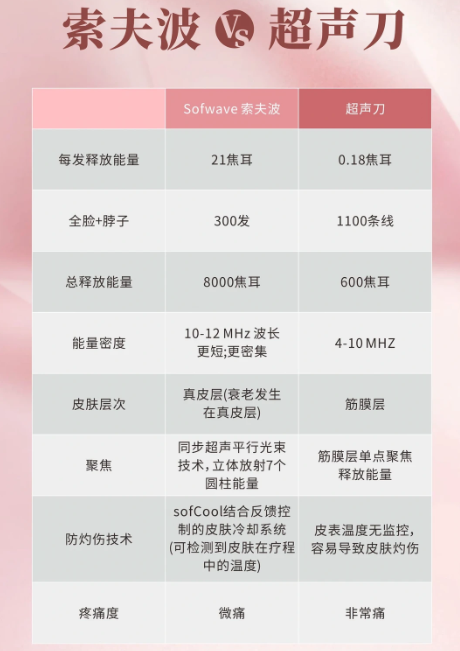
3. Different levels shouldn’t be judged by the same standard.
In simplest terms: Sofwave works like “pressing down on a loose mattress,” while the Ulthrea is akin to “lifting up sagging springs.” One targets skin firmness, while the other focuses on supporting deeper structural layers. You’ll be disappointed if you compare Sofwave’s lifting effect to that of the Ulthrea, or vice versa when comparing their respective skin improvement results. Identifying your main concerns first is the first step in choosing the right device.
【看更多韓國皮膚科實評】別只看機器,機構也很重要
同樣一臺機器,不同醫師打法差很多。順手看看其他韓國皮膚科的價格與評價,把功課做齊:
BeautsGO 診所評價
II. Let’s dive deeper into point 2: Sofwave and the Ulthrea version cause much less pain, but just because the pain level is lower doesn’t mean it’s right for you.
A quick search on REDnote shows that Ulthrea is often labeled as “painful to the point of tears,” while Sofwave is described as “almost painless.” Neither claim is entirely false, but pain level isn’t the only factor to consider. Lower pain doesn’t necessarily mean lower energy or a different treatment mechanism, and it also doesn’t guarantee identical results.
1. Why is the Ulthrea more painful?
The discomfort associated with the Ulthrea comes mainly from two factors: the depth of energy penetration and the focusing mechanism. It concentrates high-heat energy at a single point in the fascial layer, raising the temperature instantly to 60 to 70 degrees. This deep-level heat stimulation naturally spreads to the nerve endings.
- More pain near the bones: In areas where the bones are prominent, such as the chin corner and above the cheekbones, the pain becomes more noticeable when the ultrasound reaches the periosteum.
- The higher the energy, the more painful it is: Some people ask their doctors to increase the energy level for better results, but higher energy also means greater risks and more pain — it’s not true that the higher, the better.
- The anesthesia method affects how much pain you feel: using anesthetic cream, taking oral painkillers, local anesthesia, or even general anesthesia can all significantly reduce the actual pain level. Those who say it’s “very painful” online might simply not have had adequate anesthesia applied.
2. Is Sofwave really “slightly painful”?
Sofwave’s synchronized parallel beams distribute energy into multiple thin columns, covering a large area but with lower energy at any single point, which indeed results in much less pain. However, “mild pain” doesn’t mean no sensation at all.
- The stinging sensation is like being pricked by a hot needle: most people describe it as a warm feeling combined with a mild sting, which is more noticeable on the chin and along the edges of the Forehead.
- The sofCool cooling system makes a big difference: The Sofwave device is equipped with sofCool cooling technology, which keeps the ONDO of the skin at a lower level, resulting in less burning sensation compared to traditional HIFU devices.
- Low pain level is an advantage, but not a selling point: if your skin is severely sagging, even pain-free treatments won’t be able to lift the fascial layer—you still need to use a device that causes some discomfort.
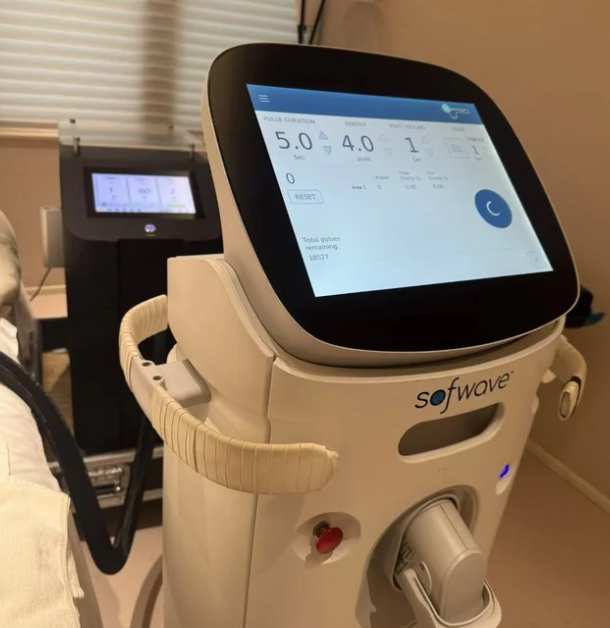
3. Pain level is just a reference and not the sole factor in making a decision
Many people choose Sofwave solely because they’re afraid of pain, and there’s some truth to that reasoning. But if you’re over 45 with visibly sagging jawlines and your Apple Zone having sunk below your nostrils, relying on Sofwave alone might give you the feeling that it makes no difference at all. On the other hand, if you’re only 28 with slightly thin skin and prominent Pores, opting for Ulthrea could yield stunning results, though it will also come with more discomfort and a higher cost. When choosing a treatment device, you should consider your age and degree of skin laxity, rather than just focusing on pain levels.
III. Finally, let’s clarify point 3: Who should choose Sofwave and who should opt for the Ulthrea version?
Once you’ve clarified the first two points, the next step is to be honest with yourself. The comparison table below isn’t an absolute standard, but it can help you quickly determine the right direction.
| Decision points | Sofwave is more suitable. | The Ulthrea version is more suitable. |
|---|---|---|
| Age Group | Ages 25–35: First signs of aging | Over 35, noticeably sagging skin |
| Main concerns | Rough skin texture, fine lines, mild sagging | Blurred jawline, sagging Apple Zone, excess flesh at the corners of the mouth |
| Pain tolerance | Afraid of pain, haven’t had any lifting treatments before | Willing to tolerate moderate to high pain for noticeable lifting effects |
| Budget | Lower per session cost, with an acceptable shorter duration of effect | Higher per session, hoping to maintain it for over a year |
| Recovery period | Almost no recovery time—you can wear makeup the next day | There may be swelling, soreness, and numbness, with recovery taking 3–7 days. |
1. Who is suitable for Sofwave?
- Ages 25 to 35 – showing early signs of aging but not yet sagging: the skin begins to thin, hair growth becomes more noticeable, there’s a slight indentation above the Nasolabial Fold Correction, yet the jawline remains defined.
- Afraid of pain and haven’t had lift treatments before: Want to try something mild first to see how I react to ultrasound-based therapies.
- Wanting to improve skin texture more than lifting facial contours: If you care more about whether your skin looks vibrant rather than whether your face is lifted.
2. Who is suitable for the Ulthrea?
- For those over 35 whose faces have started to sag: the Apple Zone drops lower, Marionette Line Correction appears at the corners of the mouth, and the jawline loses its firmness.
- Those who can tolerate pain and are looking for immediate results: they’re not afraid of pain, don’t want to keep visiting the clinic frequently, and hope the treatment will last around a year.
- Have sufficient budget and be prepared for a recovery period: The Ulthrea is generally more expensive than the Sofwave, and it may also require a few days of recovery after the procedure.
3. If neither option fits you, don’t rush into making a decision.
Not everyone is suitable for using these two devices. In the following situations, I recommend that you consult a professional doctor first rather than placing an order right away.
- Severe skin sagging that requires surgery: If your eyelids droop and block your SISUN, or if the flesh on your chin has sagged, ultrasound treatments won’t help—you may need to consider facelifts or thread lifting.
- Pregnancy, breastfeeding, and immune system disorders: For these groups, it is generally not recommended to undergo any photonic or ultrasound treatments.
- If you have a large number of acne spots, wounds, or an active herpes outbreak on your face: energy can irritate inflamed areas, so it’s best to address skin issues first before considering lifting treatments.
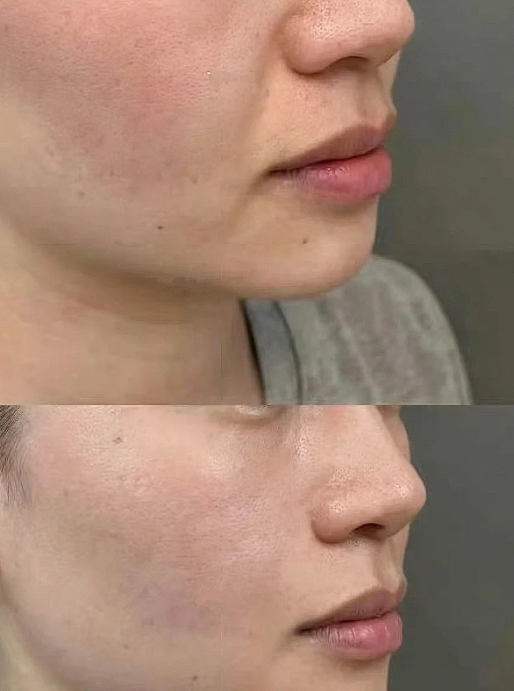
IV. Common Misconceptions: I advise you not to believe these 3 statements
There are plenty of opinions online about these two machines, but many of them are aimed at driving sales. Here are the three statements I hear most often—and which I really want to correct.
1. “Sofwave is an upgraded version of the Ulthrea.”
Wrong. They operate at different depths and aren’t meant to upgrade one another but rather complement each other. Sofwave isn’t a “painless version of Ulthrea” — it’s actually a separate technology designed for the middle layer of the dermis. If you need deep-level lifting, no amount of Sofwave use can match the results achieved by Ulthrea.
2. “The more painful, the more effective”
That’s not entirely correct. Pain is related to the intensity of energy, but effectiveness doesn’t mean you have to suffer to the point of tears. Doctors will adjust the energy level based on your skin thickness, tolerance, and the target depth. Blindly pursuing higher energy levels can result in burns, nerve damage, or chronic swelling—far from being worth it.
3. “One treatment lasts for three years.”
For any non-surgical lifting treatment, how long its effects last depends on your rate of aging. Staying up late, failing to use sunscreen, and rapid weight loss can all cause the results to fade sooner. The Ulthrea typically provides effects that last between 1 year and 1.5 years, while the Sofwave offers even shorter duration. Claims that the results will last three years are usually just marketing tactics.
V. How to book with the highest certainty? Do your homework before placing an order
If you already have a general idea of which device might be suitable for you, the next step isn’t to book an appointment right away, but to verify two things first: whether the clinic uses genuine devices, and whether the doctor can tailor the treatment energy level to your specific condition. Many Dermatology clinics in South Korea have these two types of devices, but there are significant differences in terms of price, treatment methods, and post-treatment care. It’s recommended to check out options through BeautsGO before making a decision.
【Compare Prices & Check Equipment】First, find out which Dermatology clinics in South Korea use genuine equipment. Whether the devices are original and whether they receive regular maintenance directly affects both safety and treatment results. On BeautsGO, you can check the qualifications of clinics and prices for various treatments—compare options from at least three clinics before making an appointment: BeautsGO’s South Korea Dermatology Price Comparison
Summary
There’s no absolute “better” or “worse” between Sofwave and the Ulthrea version — only what suits your individual needs. First, you need to figure out whether your skin is primarily “loose” or “sagging,” how much pain you can tolerate, and what your budget and recovery time can accommodate. For younger people whose skin has simply become thinner and looser and who are sensitive to pain, Sofwave is a great entry-point option. For those who are older, have noticeable sagging in their jawline or Apple Zone, and aren’t afraid of pain, the Ulthrea version offers more immediate lifting effects.
One final reminder: don’t let yourself be swayed by slogans like “cutting-edge machines,” “upgraded versions,” or “three years of results with just one treatment.” What truly determines the outcome isn’t the model of the machine, but rather your skin condition, the doctor’s expertise, and their experience in performing such procedures. It’s worth comparing options from several clinics and doing thorough research before making a decision—this is definitely a hundred times better than ordering something on impulse. For your reference, here are some related articles: The actual price of Theia 2026, guidance on booking treatments for Theia, a list of top and bottom performers for Theia treatments, prices for Major, average costs at clinics in Busan, information on how to book appointments there, and important guidelines regarding cosmetic procedures for minors in Jeju.
Disclaimer: This article is an objective educational piece based on public information and user experiences. It is not medical advice, nor does it constitute any recommendation or warranty by a clinic. Actual results, level of discomfort, suitability, and prices are subject to the clinic’s on-site assessment and the pricing announced at the time of service. Cosmetic procedures carry risks, so please seek thorough consultation and assess your own health condition before undergoing any treatment. The prices mentioned herein are reference values in South Korean won; exchange rates fluctuate, so the final amount will be determined at the time of payment.