 By 變美體驗官
Before going to South Korea for facial treatments, many people first search online: “Is this clinic just using a mass-production approach?” Especially for well-known clinics like Wooa Dermatology in Gangnam, Seoul, there are plenty of doubts about whether they follow such an efficient, high-volume model—where patients enter and leave within just five minutes with a whole line waiting outside. If you’re wondering whether Wooa Dermatology in South Korea uses this kind of mass-production approach, this article will clarify things for you. Without any bias or exaggeration, it will help you determine whether the clinic truly operates this way by examining three aspects: the consultation process, the way in-person consultations are conducted, and the treatment plan design. After all, you only have one face—being treated like just another number in a queue vs. being treated as a genuine client makes a huge difference in the experience.
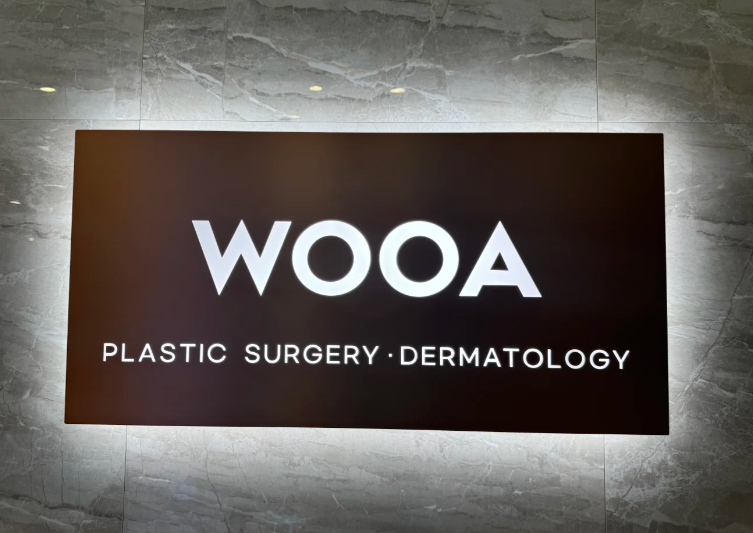
I. Let’s get to the conclusion first: Wooa Dermatology in South Korea offers one-on-one consultations, rather than a mass-service model.
Regarding whether Wooa Dermatology in South Korea operates on a assembly-line model, the straightforward answer is: based on the service philosophy it promotes, its focus is on “personalized one-on-one care,” rather than a fast-track assembly-line approach. Typical characteristics of clinics using an assembly-line system include standardized treatment packages, uniform procedures, rotating doctors, and perfunctory consultations. In contrast, personalized one-on-one care involves consultations with the clinic director or a dedicated doctor, customized treatment plans tailored to your skin condition, and ample time for pre-operative discussions.
⚠️ Signs of mass-production-style service: immediate push for preset packages as soon as you enter, consultations focused only on which procedure to choose, frequent changes in doctors, and significantly shortened treatment times—these are red flags that should alert you more than just online reviews.
In a nutshell: to determine whether a clinic operates like a factory-style setup, don’t rely on what they claim about themselves — instead, see if they’re willing to be clear about three things: the duration of the in-person consultation, whether there’s a fixed doctor assigned, and whether treatment plans are customized to each individual.
II. First, figure out: What exactly is a “assembly-line Dermatology” clinic?
“Assembly line” isn’t an insult—it’s actually a business model in its own right: efficient, low-cost, and ideal for standardized procedures. But when applied to cosmetic surgery, the problem lies in the word “standardized.” The table below clearly shows the differences between the two approaches:
| Comparison Dimensions | 🔁 Assembly Line Mode | 🎯 One-on-one personalized service |
|---|---|---|
| In-person consultation | Standardized Questionnaire / Consultation by a Specialist in Person | Personal consultation by a doctor or clinic director |
| Solution Design | Fixed packages – pretty much the same for everyone | Designed separately based on skin condition and goals |
| Is the doctor fixed? | Shift system – whoever’s available does it | Regular follow-up with your doctor/clinic director |
| Pre-surgery consultation | Too short – focus on closing deals | Fully—first understand your needs before crafting a plan. |
| Suitable Projects | Basic hydration, standardized phototherapy | Anti-aging, Lifting, and comprehensive cosmetic treatments for aesthetic enhancement |
💡 Neutral reminder: A streamlined approach doesn’t necessarily mean “poor quality.” For basic fillers and simple skincare treatments, a streamlined process actually offers better value for money. What you really need to be wary of is when you’re dealing with procedures that require aesthetic judgment and precise skill, yet are handled in a mechanical, formulaic way.

III. What’s the actual process like when visiting Wooa Dermatology in South Korea?
The strongest evidence to determine whether a clinic operates on an assembly-line basis lies in its workflow. Taking the standard process at clinics that use appointment systems as an example, for those establishments that focus on personalized services like wooa, the typical sequence is: online consultation (where clients explain their needs) → registration at the clinic → in-person consultation with a doctor or clinic director (to examine the skin, ask about medical history, and discuss expectations) → presentation of treatment options and pricing → procedure after confirmation → post-treatment instructions. The key difference lies in the third step — whether the in-person consultation is a genuine face-to-face talk or just the consultant filling out a form with checkboxes.
| Process Steps | 🔁 Assembly-line approach | 🎯 Wooa’s Signature Approach |
|---|---|---|
| Initial Consultation Discussion | Consultant asks on your behalf and recommends packages | Talk directly to the doctor/clinic director about your needs |
| Skin Assessment | Make a quick visual assessment | Combining device testing with in-person consultation |
| The plan is finalized. | Fixed price list application | Designed separately based on the assessment results |
| Provider | On-duty doctor that day | Lock in a specific doctor at the time of booking |
⚠️ Note: No matter how well the process is described, it ultimately depends on your in-person visit to the clinic. When making an appointment, you can ask ahead of time whether the consultation will be conducted by the director or a consultant. If their answer is vague, be extra cautious.

IV. WOOA Dermatology in South Korea: One-on-One Consultations vs. Batch Treatments – A Quick Comparison of Key Differences
Combine the first two sections into a “Quick Assessment” table that readers can check against—it’s far more useful than reading ten online reviews.
| What concerns you | 🔁 The assembly line delivers it to you | 🎯 Personal consultation just for you |
|---|---|---|
| Who gets to decide about my face? | The package rules. | You and the doctor can decide together |
| Does the doctor know me? | The person might change next time you come. | Consistent follow-up for continuity |
| Can the plan be changed? | Basically impossible. | Adjustments can be made based on feedback. |
| Comfort level | Feels like a rush to catch everything | A relaxed pace |
V. South Korea’s Wooa Dermatology Customized Solutions – What Exactly Does “Customization” Entail?
Many people think “customization” is just marketing jargon. In practice, it should be reflected in at least three aspects: First, the treatment packages are tailored to individual needs—there’s no one-size-fits-all approach. Second, the energy or dosage is adjusted based on your skin thickness and degree of sagging, rather than using fixed parameters. Third, follow-up consultations are provided after the procedure to make necessary adjustments—things don’t end once the treatment is complete. These three points truly distinguish between “non-industrialized” and “industrialized” treatment methods.
💡 Conversely, if a clinic claims to offer customized treatments but gives you a quote without even conducting a skin analysis, then the term “customized” is nothing but empty rhetoric. During your in-person consultation, you can ask to see how the assessment is carried out—this isn’t being picky; it’s about protecting yourself.
VI. What signs indicate it’s a “assembly line” (be cautious)
This section focuses on red flags. If you encounter any of the following situations at Wooa or any other clinic, you should reassess whether it operates like a assembly line.
| Observation Points | ⚠️ Assembly Line Performance |
|---|---|
| Length of in-person consultation | Clearly too short – focusing more on closing deals than on communication |
| Doctor continuity | Shift work, no fixed schedule |
| Differences in plans | Everyone looks the same—no personality at all |
VII. What signs indicate it’s not a mass-produced service (the real situation at WOOA)
Is Wooa Dermatology in South Korea a conveyor-belt clinic? Judging from the services it offers, there are several “non-conveyor-belt signs” that it highlights as its key advantages—personal consultations with fixed doctors or clinic directors, evaluations followed by quotes, customized treatment plans tailored to individual needs, and appointment systems to manage daily patient flow. If these promises are fulfilled upon visiting the clinic, then it certainly isn’t operating on a conveyor-belt model.
Neutral reminder: Keep the selling points separate from the actual delivery. The safest approach is to raise these questions during booking—only then can you get specific answers without evasion, ensuring higher credibility.

VIII. A Neutral Perspective: Are Assembly Lines Always Inferior?
At this point, I need to wrap things up nicely. The pipeline model isn’t inherently flawed—it’s efficient and cost-effective, making it perfect for basic hydration treatments and simple phototherapy procedures. Many highly rated clinics also operate on a semi-pipeline basis. The real question here is whether Wooa Dermatology in South Korea follows such a model. It’s not about labeling a clinic as “good” or “bad,” but rather about helping you determine whether the services it promises match what you actually receive.
If you’re getting treatments that require precise aesthetic judgment and energy control—such as Lifting, HIFU, or filler injections—it’s better to opt for one-on-one consultations for more accurate results. On the other hand, for simple procedures like hydrating the skin or treating acne, a batch-style service is perfectly fine. The key is to choose the right service model based on the specific treatment, rather than blindly favoring one-on-one sessions or completely avoiding them.
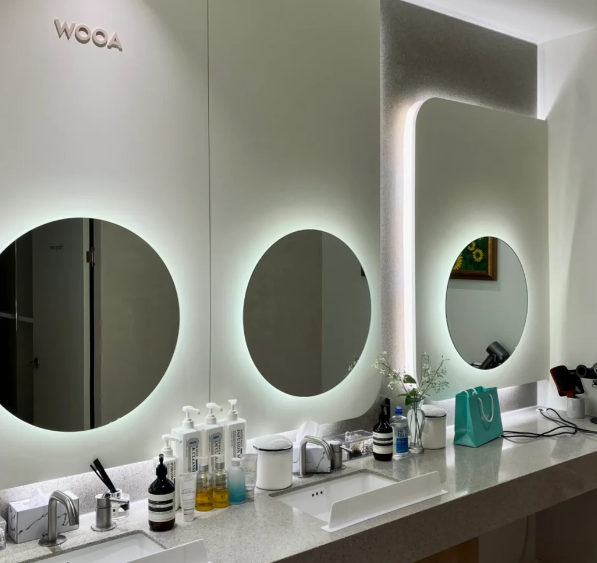
IX. Who is suitable for visiting Wooa Dermatology in South Korea, and who might be better off at other clinics?
With the “customized, one-on-one consultation” approach, the table below helps you quickly match accordingly:
| Audience | Fit | Explanation |
|---|---|---|
| My First Facial Treatment in Seoulcheil | 👍 Perfect for | Someone leads the way and communicates clearly, so it’s hard to mess up |
| Getting Lifting/Anti-aging Treatments | 👍 Suitable | Aesthetic evaluation is needed; a one-on-one consultation ensures better results. |
| Only basic hydration treatment | 🤔 Check the budget | Customized pricing might be on the higher side—check around before making a decision. |
| The schedule is extremely tight – need it fast | ⚠️ Choose carefully | The time required for a customized in-person consultation might seem slow to those in a rush. |
X. Common Questions FAQ about Wooa Dermatology in South Korea
Q1: Is Wooa Dermatology in South Korea a batch-style clinic? What should you ask first? Ask whether “the con
sultation is done by the director/regular doctor or by a consultant.” If the answer is specific and identifies a particular doctor, it indicates a non-batch-style approach; if they say “it doesn’t matter—whoever is available will do it,” then it’s likely batch-style.
Q2: Doesn’t a reservation system mean it’s not a mass-service model? Not nece
ssarily. A reservation system is simply used to manage customer flow and doesn’t determine the quality of the consultation. But it does at least ensure that “you won’t have to wait in line with a crowd,” which is an advantage—not a guarantee of top-tier service.
Q3: Is a one-on-one consultation more expensive? Usually ye
s. The doctor’s time and assessment costs are all included in the fee. Whether it’s worth it depends on the procedure you’re getting—cosmetic treatments tend to be reasonably priced, while basic procedures might not be cost-effective.
Q4: How can you verify that they truly follow a “assessment first, then proposal” approach? During
the in-person consultation, ask to see how the skin assessment is conducted and inquire why that particular treatment was chosen and how its parameters were determined. If they can explain it clearly, it means it’s truly customized; if they can’t or skip those details, be cautious.
Q5: Can you tell if a procedure is part of a mass-production process when booking through BeautsGO? The platform does provi
de information on the price per service and details about the clinics, but the quality of in-person treatment still needs to be assessed upon visiting. Reading the descriptions beforehand and asking extra questions during booking is the most reliable approach.
Q6: If I encounter a one-size-fits-all approach, can I switch providers on the spot? Absolutely. If you’re no
t satisfied with the in-person consultation or the proposed plan, you have the right to walk away from the deal. After all, it’s your face—it’s better to spend an extra ten minutes finding another provider than to settle for something subpar.
XI. Related Recommendations
- 📌 Is Pria Dermatology in South Korea a mass-production-style clinic? Their service is truly outstanding: a Chinese-speaking clinic director accompanies you throughout the process, plus personalized consultation with detailed records kept for every client. —— Check out our comparison article to see how another clinic manages to avoid a mass-production approach.
- 📌 Is Ruby Dermatology in South Korea a one-on-one service? I personally experienced the consultation, which takes at least 20 minutes. The chief physician focuses solely on me, completely different from mass-service models — the epitome of personalized one-on-one care.
- 📌 A Comprehensive Guide to Linear and Non-Linear Approaches in South Korea’s Dermatology | Choose the Treatment Method That’s Best for You — Learn about both approaches and understand their differences objectively.
- 📌 Recommended Dermatology clinic in Yeouido: Rather than a high-volume clinic, I much prefer the privacy here. With one-on-one consultations, there’s no need to worry about unwanted sales pitches — ideal for a personalized experience.
- 📌 How is the Dermatology clinic in Herne, South Korea? A must-visit spot for elites in Cheongdam-dong, known for its personalized 1v1 consultations by the chief physician—no mass treatment approach, just dedicated care from the head doctor.
- 📌 Complete Guide to Nohd Dermatology in South Korea! Prices, booking processes, the “assembly line” controversy, and honest customer reviews revealed — explore these issues from a neutral perspective through the lens of the “assembly line” debate.
Going back to the beginning—Is Wooa Dermatology in South Korea a factory-style clinic? The answer isn’t found in online reviews; it’s determined the moment you step into the clinic: Is the consultation conducted by a doctor in person? Is a personalized treatment plan created just for you? Is there a dedicated doctor to follow up on your case? If all three of these can be answered affirmatively, then it’s definitely not a factory-style clinic. But if even one of them is unclear, you should be alert. You only have one face—spending an extra ten minutes to understand the process is far more worthwhile than regretting it later. Do your homework, understand how things work, and clarify the treatment plan—only then will your visit truly be worth it.