 By 變美體驗官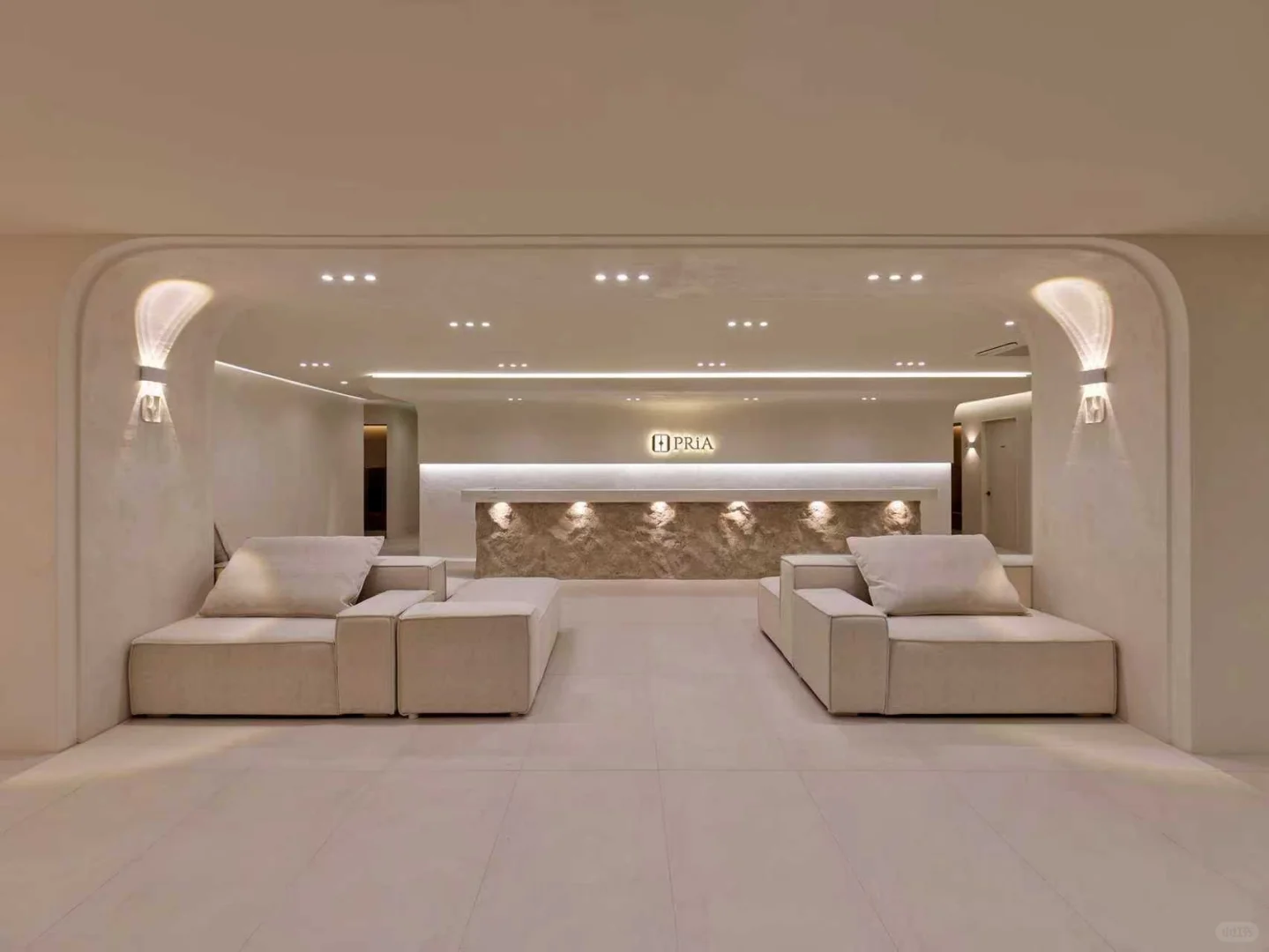
I. Is Pria Dermatology in South Korea a kind of assembly line? Let me state the conclusion first: Definitely not.
“Is Pria Dermatology in South Korea just a standard ‘assembly-line’ approach to skin treatments?” This is probably the question that every woman considering seeking skin care treatments in Gangnam asks before making an appointment. After all, the South Korea medical aesthetics market is notoriously mixed, and there are indeed some “factory-style clinics” that focus on low prices and high throughput: register upon entry → wait in line for your number → lie down for 10 minutes → let the technician perform the treatment → pay and leave – the whole process resembles going through security at an airport. However, Pria Dermatology represents a different kind of approach.
Let me state the conclusion first: pria Dermatology is not a standard, mass-produced clinic. It is a medical dermatology practice that focuses on a “private, one-on-one personalized” approach. From the moment you enter until you leave, every aspect of its operations runs counter to the logic of rapid volume production. Don’t believe it? Let’s break it down step by step to see what exactly distinguishes pria from a typical mass-produced clinic.
II. What exactly is a “assembly-line clinic”? Let’s define it first and then make some comparisons.
Before answering the question “Is Pria Dermatology in South Korea really operating on a assembly line model?”, we first need to clarify what kind of clinic can be considered to be operating on such a model.
Simply put, the assembly-line approach in Dermatology can be characterized by the following features; you can match them up to understand better:
- 🔴 Performed by nurses: Energy devices such as lasers, HIFU, or Thermage are operated by nurses or newcomers who have only received a few weeks of training. The hospital director is merely present to give a brief greeting.
- 🔴 Template-based solutions: Regardless of your skin type, allergy history, or lifestyle habits, we simply offer a standard package – “Since you’re here, why not go with this package?”
- 🔴 Aggressive sales tactics: While lying on the treatment bed, you’re still being pressured with offers like “Adding one more treatment will enhance the results significantly.” By the time it comes to paying, the bill doubles compared to what was agreed upon during the appointment.
- 🔴 Open-space treatment: Multiple people receive treatment in the same large room, separated only by curtains—there is no privacy at all.
- 🔴 Radical time reduction: The standard 45-minute treatment duration with HIFU has been shortened to just 20 minutes, since there are still 5 other patients waiting in line.
- 🔴 Surcharge for foreign customers: If you present a foreign passport, the price for the same service will be 30% to 50% higher than for local South Koreans.
If you meet three or more of these six criteria, it’s almost certain that you’re working on an assembly line.
So, is Pria Dermatology in South Korea just a standard operating procedure? Let’s compare them item by item.
III. Pria’s “Anti-Assembly Line” Design: Five Irrefutable Evidence Points, From Space to Systems
In regards to the six criteria mentioned above for this production process, Pria’s actual situation is as follows:
Solid evidence one: The energy device was operated personally by the hospital director, not by a nurse.
pria has clear regulations: all energy-based treatment devices (such as Thermage, HIFU, Titanium Lifting, Onda, etc.) must be operated personally by doctors at the level of department heads. The clinic employs 12 specialist department heads (including the chief physician, Lee Chung-hoong, who graduated from the Medical School of Seoul National University), and each of them possesses the necessary qualifications and experience to operate these devices independently. This fundamentally differs from the “nurses perform the procedure, department head signs off” model commonly seen in other clinics. Imagine this: when you undergo Thermage treatment, it is a specialist doctor with over a decade of experience standing beside you, rather than a nurse who has only been working for three months. This is one of the key differences between pria and such conventional approaches.
Solid evidence number two: The in-person consultation process is completely personalized, with no use of pre-made templates.
Pria’s brand philosophy states: “Through an experienced medical team, we provide personalized one-on-one services tailored to each customer’s unique characteristics.” In other words, your skin type, age, lifestyle, and budget are all key factors in developing a customized treatment plan—not just a one-size-fits-all approach like “get Plan A whenever you come in.” Two customers who visit on the same day but have different skin types and needs will receive completely different treatment plans. This is something that cannot be achieved in a mass-production clinic, because the fundamental logic of such a business model is to “standardize procedures to increase efficiency and volume.”
Solid evidence number three: Refuse unnecessary sales pitches and clearly display all prices.
Pria has made it clear in its official statements: “We reject unnecessary sales pitches and focus on providing accurate treatment plans and professional consultation services.” At the same time, we adhere to a “transparent pricing policy and strictly ensure that all products are genuine and used in accordance with standard dosages.” In a place like Gangnam, where every inch of land is extremely valuable, not many clinics dare to include such a statement in their official introductions. Behind this lies a different business logic: while traditional models rely on adding extra services and charging extra fees to generate profits, Pria earns its income through word-of-mouth and repeat purchases.
Evidence number four: The design of private spaces is not suitable for large-scale commercial establishments.
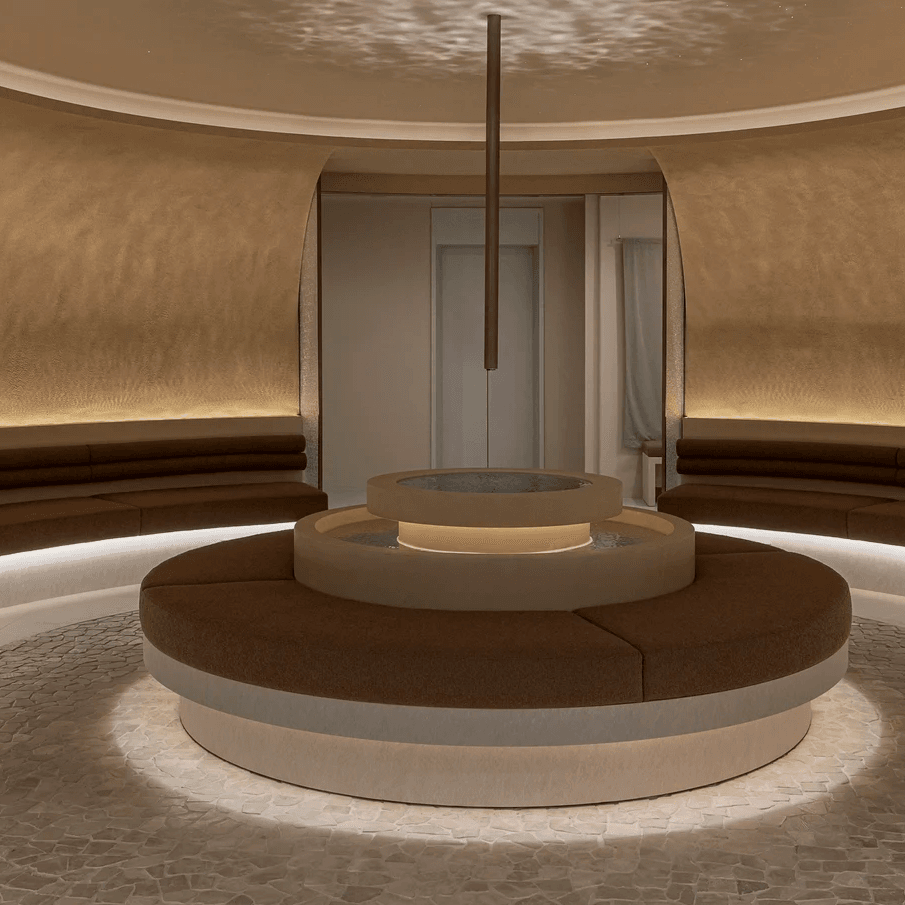
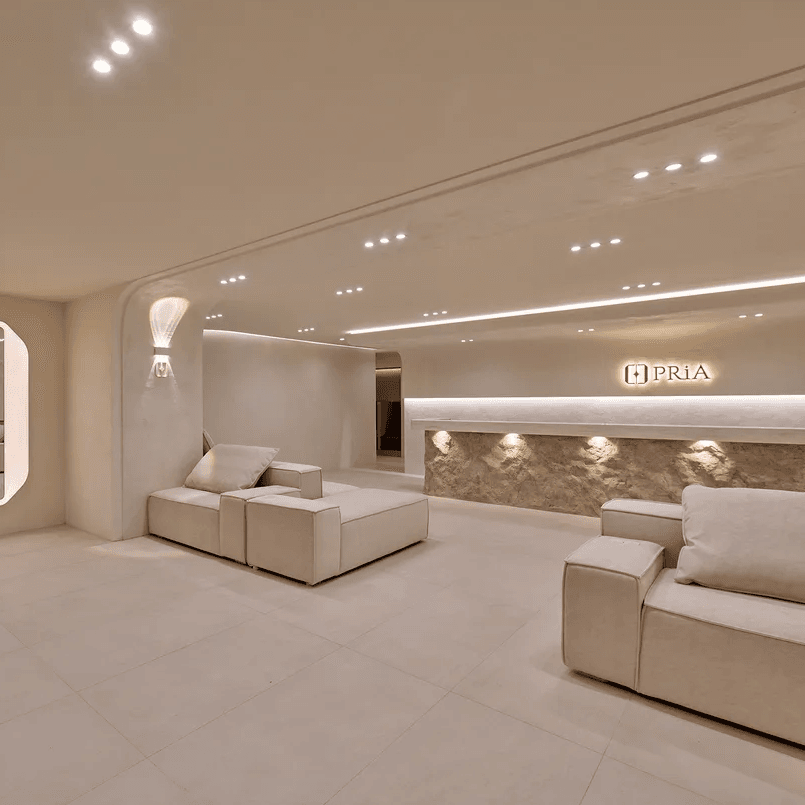
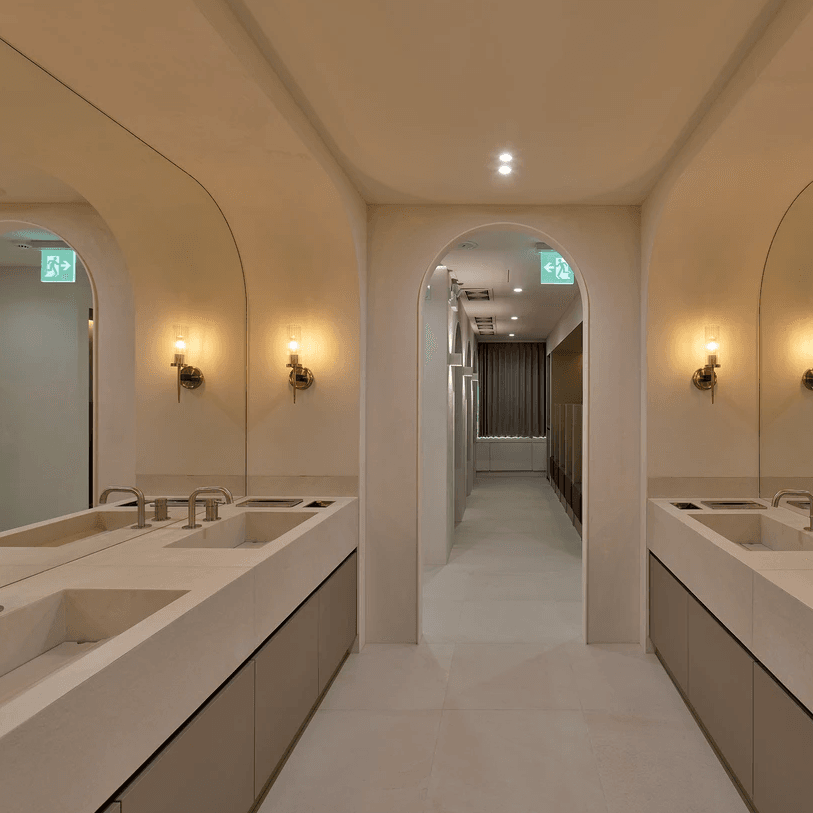
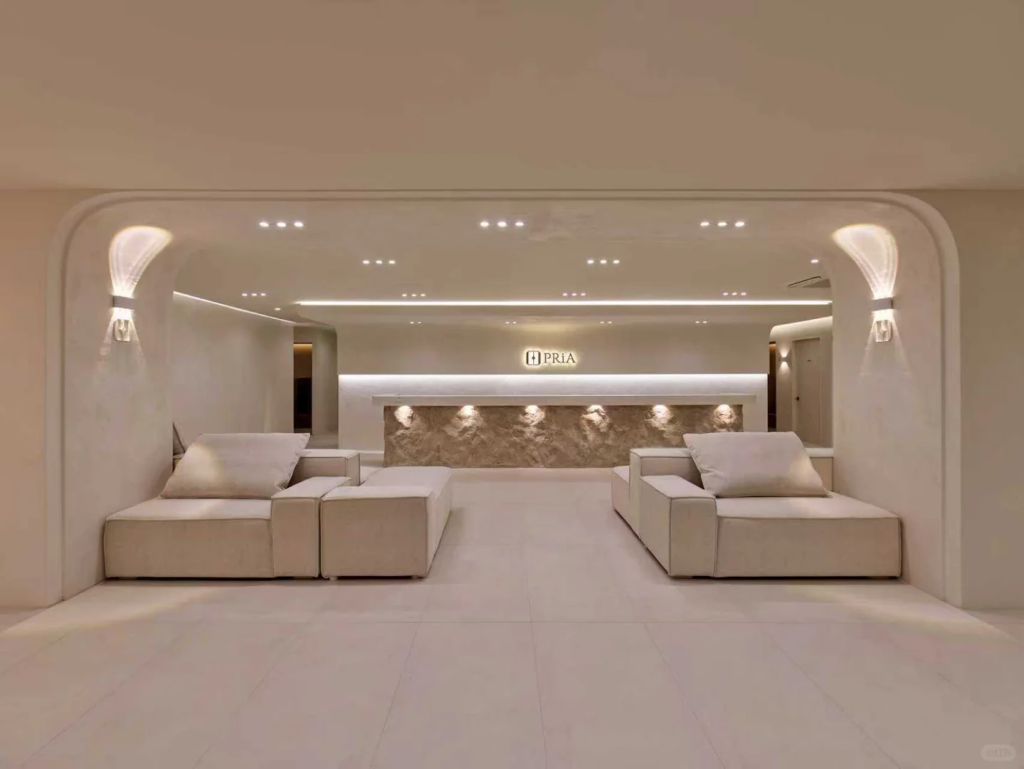
Pria occupies floors 13 and 14 of the Yunan Building, a total of two floors. As can be seen from the actual photos on BeautsGO, there are separate waiting areas, private consultation rooms, and separate treatment rooms—all of which are designed as “small rooms” rather than large open spaces. This layout simply makes it impossible to accommodate dozens of people at the same time, as the physical space does not allow it.
Proof number five: Foreign tourists do not pay a higher price; they pay the same amount as locals.
This is a question that many women are very concerned about: “Will I be overcharged if I use a Taiwanese or mainland Chinese passport?” Pria’s transparent pricing policy clearly addresses this concern: foreign customers enjoy the same price standards as local South Koreans. The price displayed when booking through the BeautsGO APP is exactly the amount you will pay upon arrival at the clinic; there will be no last-minute price increases or forced additional services just because you are a foreigner.
After comparing these six standards with the assembly line model, it turned out that pria met none of them. Is South Korea’s pria Dermatology practice really based on an assembly line approach? The answer is clear: no.
IV. The Chinese-speaking director of South Korea’s pria Dermatology accompanied the entire process, providing foreign guests with peace of mind.
When it comes to the question of “Is Dermatology in South Korea just a assembly line?”, there is another key indicator: the level of service provided to foreign customers. In such clinics, the attitude towards foreign patients is usually “treat them as soon as they arrive, send them away after the treatment is complete, and avoid any further communication”, because language barriers eliminate the need for sales pitches and discussions.
Pria adopts a completely different approach: a Chinese-speaking staff member accompanies you throughout the entire process. What does that mean? From the moment you step through the doors of the clinic, there will be someone who speaks Chinese by your side throughout the entire experience—not just someone who appears at the counter and then disappears again. Instead, they will be there to assist you every step of the way.
- ✅ Arrival and Check-in: Upon arriving at the clinic entrance, the Chinese-speaking manager will be waiting for you to assist you with registration and scheduling.
- ✅ During the in-person consultation: When the hospital director conducts the consultation, a Chinese-speaking staff member will be present throughout the process to ensure that every question and concern you raise is accurately conveyed to the doctor, preventing any misunderstandings such as “you said A, but the doctor heard B”.
- ✅ Plan Explanation: After the doctor provides their recommended plan, the Chinese-speaking manager will help explain it to you in detail in Chinese—explaining why this particular treatment is recommended, what the expected results are, how long the recovery period will be, and whether there are any alternative options available.
- ✅ Pre-treatment Confirmation: Before entering the treatment room, we will reconfirm with you the scope of the procedure, the intensity of the energy used, and the expected sensations, to ensure that you have a full understanding and give your informed consent.
- ✅ Post-treatment care guidance: After the procedure, the Chinese-speaking manager provided detailed instructions on post-treatment care (such as when it is safe to wash your face or apply makeup, and what precautions should be taken). They also gave you a written guide in Chinese to take home.
- ✅ Expense verification: We will carefully check each item of the charges with you during the payment process to ensure that the total amount matches the quote provided at the time of reservation, and there are no hidden additional fees.
Such a level of comprehensive accompanying service is absolutely impossible to achieve in a streamlined clinic model. After all, the business philosophy behind a streamlined approach emphasizes “fast entry and fast exit.” Adding another translator would mean additional labor costs, and every additional step would slow down the overall process. The fact that Pria is willing to invest in such resources demonstrates that it does not follow the “low-profit, high-volume” strategy typical of streamlined operations.
💡 In other words: if Pria were a assembly line, there would be no need at all to assign a Chinese-speaking supervisor to accompany you throughout the process – wouldn’t it be much more convenient if you could just complete everything on your own? But Pria chooses the more troublesome, expensive, and slower approach, because what matters to them is your experience, not the turnover rate.
V. The in-person consultation services at Pria Dermatology in South Korea are completely one-on-one; there is no “choose one from three packages” option.
One of the most typical features of assembly-line clinics is that the traditional face-to-face consultation has been transformed into something akin to “ordering food”: you sit down, the consultant brings out a “menu,” and then asks, “We have Package A, Package B, or Package C – which one would you like?” The whole process takes no more than five minutes. But what about the face-to-face consultations at pria?
Step 1: Conduct a thorough consultation – don’t just ask “what do you want to achieve”.
When the director of pria conducts a personal consultation (not conducted by a nurse or consultant, but by the doctor himself), he will take the time to get to know you first:
- The current condition of your skin (dry, oily, sensitive, or combination type)
- Your skincare habits (what products you use, whether you are undergoing any other cosmetic treatments)
- Your allergy history (to which ingredients you are allergic, and whether you have had any allergies to anesthetics)
- Your daily routine (frequent late nights, eating habits, stress levels) all directly affect the condition of your skin and the effectiveness of any treatments you undergo.
- What is your main goal? Do you want immediate lifting effects, long-term improvement in skin quality, or both?
These questions may seem rather tedious, but they are precisely the foundation of personalized one-on-one treatment. After all, when it comes to skin laxity, the treatment approaches required for someone who develops it due to staying up late at 25 or due to Collagen loss at 45 are completely different. Chain clinics ignore these differences and simply offer standard packages; however, Pria will first understand your specific situation before recommending a treatment plan for you.
Step 2: Instrument testing – letting data speak for itself
After the consultation, the practitioner will use skin testing equipment to conduct an objective assessment—such as the moisture content of the stratum corneum, the amount of sebum secretion, the depth of pigmentation, and the density of Collagen, among other parameters. The significance of this step lies in ensuring that the treatment plan is based on factual data, rather than subjective judgments such as “I think you should do this or that.” Streamline clinics often skip this step, as it increases time costs.
Step three: Personalized customization – not just a choice among three options
Only with the consultation information and test results can the director formulate a treatment plan for you. This plan is not about “choosing Package A or Package B,” but rather a customized treatment plan tailored to your individual needs – it may consist of a single treatment or a combination of procedures (for example, “first undergoing Onda to address contour issues → then using Rejuran to improve skin quality after 2 weeks → and finally applying Titanium Lifting to reinforce the results after 1 month”). Every step of this plan is clearly explained: why such an arrangement is made, what the expected outcomes of each step are, and why a certain interval is required between them.
At this point, you should ask yourself again: Is Pria Dermatology in South Korea really operating on a assembly-line model? The three-step consultation process—questioning, examination, and personalized treatment plan formulation—requires 15 to 20 minutes of in-depth discussion. Such a model simply cannot be sustained by the business models of traditional assembly-line clinics.
VI. Why do people worry that “Pria is like an assembly line”? An analysis of three common misconceptions
Even though so many pieces of evidence have been listed above, I believe some people may still have doubts: “Is Pria Dermatology in South Korea just a mass-production system? You say it’s not, but I’m still worried.” This concern actually stems from three common misunderstandings, and we will analyze them one by one.
Misconception 1: Larger scale necessarily means an efficient production process?
Pria boasts a medical team consisting of 12 chief physicians and 4 assistants, totaling 16 people – indeed, this is a larger scale than that of an average small clinic. However, larger size does not necessarily equate to a streamlined operation. What truly matters is the “service model”, not just the number of people. The 12 chief physicians at Pria do not simply take turns performing the same procedures; rather, each of them specializes in different areas and matches the most suitable doctor according to the customer’s needs. The advantage of such a large scale is that patients do not have to wait in line for a particular doctor; instead, they can arrange their appointments flexibly based on their own requirements and schedule. This is precisely the opposite of a streamlined process, which aims for uniformity in service delivery, while Pria strives to ensure that “the most appropriate person handles your case”.
Misconception 2: Being located in the Gangnam business district means it’s a tourist accommodation?
Pria is located just 1 minute’s walk away from Exit 5 of Gangnam Station, right in the heart of the main tourist area. Many people might assume that a business located in such a spot is simply targeting tourists for profit. However, Pria’s primary customer base is not tourists—at least, according to reviews on BeautsGO, a significant proportion of its customers are local South Koreans who return repeatedly. Gangnam itself serves as Seoul’s financial and shopping hub, attracting a high-income consumer group; it is not a commercial district that relies solely on tourists for its survival. For a clinic to operate successfully in an area with such high rental costs as Gangnam Station, a “one-time profit and disappear” approach simply won’t work. What it needs are positive reviews and loyal repeat customers.
Misconception 3: Does an average price necessarily mean lower quality?
The pricing of pria in Gangnam is considered moderately high – neither the most expensive nor the cheapest. Some people might assume that “if it’s not the most expensive, it must be a mass-produced service,” but this logic is actually reversed. True mass-produced clinics tend to either charge excessively high prices (taking advantage of information asymmetry to exploit foreign customers) or set extremely low prices (reducing costs through high volume). pria, however, adopts a pricing strategy that is “transparent and reasonable.” It doesn’t need to overcharge to profit, because its goal is to increase customer repeat business; nor does it rely on low prices to attract customers, since the quality of its services is already competitive enough.
VII. Pria vs. Streamline Clinics: A clear comparison in one table
After saying so much in words, it might be more intuitive to present this in the form of a comparison table. Is Pria Dermatology in South Korea really operating on an assembly-line model? Just look at this table and you’ll understand.
| Comparative projects | ❌ The typical assembly-line-style clinics | ✅ PRiA Dermatology |
|---|---|---|
| Operators of energy equipment | Nurses/Trainees | The chief physician personally performed the procedure. |
| In-person consultation method | Choose one from three options in the 5-minute package | 15-20 minutes of one-on-one personalized customization |
| Language support | None/Simple English | The Chinese department head accompanied us throughout the entire process. |
| Sales situation | Insanely adding extra services to the package deal | The official commitment is to refrain from unnecessary sales pitches. |
| Treatment space | Large storefronts separated by curtains | Independent treatment room |
| Price policy | Foreigners cost 30-50% more than locals. | Foreigners pay the same price as locals |
| Procedure time | Desperately trying to squeeze out or catch up with one more project | Don’t take shortcuts; follow the standard procedures. |
| Postoperative follow-up | It’s over once it’s done / No after-sales service provided | Chinese postoperative care guidance + written instructions |
Eight comparisons, eight decisive victories. This is exactly why we can say with certainty that Pria Dermatology in South Korea is by no means a mass-production model.
VIII. Booking a private consultation through the BeautsGO APP: Ensure you receive a comprehensive one-on-one service.
After clarifying whether “South Korea’s Pria Dermatology practices a assembly-line model of service delivery,” the final step is to ensure that what you actually experience corresponds to the service described above, and that you have not been redirected by intermediate platforms to a branch that operates using such an assembly-line approach. It is recommended to follow these steps to guarantee the ILCHI between your reservation and your actual experience:
STEP 1: Download the BeautsGO APP – This is the official reservation platform partner of pria Dermatology (shareId=80). Make sure you are getting the official prices set by the clinic, without any additional fees added by third parties.
STEP 2: Search for “pria” and view the relevant items – browse the complete list of items and their current prices to select those that interest you in advance.
STEP 3: Submit your reservation and indicate your requirements – When making the reservation, please mention “I need to be accompanied by a Chinese-speaking staff member” or “I would like to have a consultation with the director” to ensure that the clinic can make the necessary arrangements in advance.
STEP 4: Confirmation upon arrival at the clinic – Upon arrival, confirm who will be in charge of your consultation and treatment on that day. If anything does not match your expectations, you may request assistance from the Chinese-speaking manager in communicating with relevant personnel.
STEP 5: Enjoy your one-on-one service – From the initial consultation to the treatment and post-operative care, a Chinese-speaking supervisor will be by your side throughout the entire process. You just need to relax, ask any questions you have, and enjoy professional assistance.
💡 Remember: True one-on-one service isn’t just a slogan; it’s something you can experience at every step, from the moment you enter until you leave. Pria ensures this through thoughtful space design, proper staffing, and well-established procedures—something that a standard, assembly-line-style clinic can never replicate.
IX. FAQ: Common Questions about the pria Service Model
Q1: Is Pria Dermatology in South Korea a mass-production model?
No. Pria De
rmatology is a medical clinic that focuses on a “private, one-on-one personalized” approach. Twelve specialist directors personally operate the equipment, and Chinese-speaking staff are available throughout the entire process. Treatment plans are customized for each patient, and there is no forced sales or overcharging—these principles are completely contrary to a mass-production model.
Q2: Does the Chinese manager at pria actually accompany customers throughout the entire process, or does he/she only appear occasiona
lly?
The Chinese manager is present throughout the entire process. From registration at the counter, through the consultation with the clinic director, the explanation of treatment plans, the pre-operative confirmation, the post-operative care guidance, to the final settlement, the manager is there at every step. This is the standard service process that pria has designed specifically for foreign customers – it’s not something that just happens by chance if you’re lucky enough to experience it.
Q3: If I don’t speak Korean, how can I proceed during the in-person consultation?
The
Chinese-speaking manager will provide translation throughout the entire consultation. Any questions you may have—regarding your skin condition, the details of the treatment, the recovery period, or any precautions—can be directly addressed to the director through the Chinese-speaking manager, so there will be no language barriers at all.
Q4: Will pria try to sell me more expensive services just because I’m a foreigner?
No.
pria’s official policies clearly state “rejection of unnecessary sales attempts” and “transparent pricing.” The price you see when booking through BeautsGO is the final price, and there will be no additional charges based on your passport information.
Q5: What is the biggest difference between pria and those “factory-style clinics”?
The main differences lie in three aspec
ts: ① The energy treatment equipment is operated directly by the clinic director, not by nurses; ② The face treatment plans are customized one-on-one, rather than being offered as a set of pre-selected options; ③ A Chinese-speaking clinic director is always present to assist you, rather than leaving you to figure things out on your own. These three points essentially represent two completely different business models.
Q6: How can I ensure that the clinic I book is actually pria’s main branch rather than a satelli
te location?
When booking through the BeautsGO APP (shareId=80), the system will directly connect you with pria’s main branch located on floors 13-14 of Yu Nan Building in Gangnam. Avoid using unknown booking platforms or private messages on social media for reservations, as these channels may refer you to other clinics.
Q7: Is pria suitable for people going to South Korea for medical beauty treatments for the first time?
Absolutely.
The Chinese-speaking manager accompanies customers throughout the process, helping to resolve language barriers. Transparent pricing eliminates concerns about overcharging, and one-on-one customization ensures that patients choose the right treatments—these three aspects are precisely the biggest obstacles for those undergoing medical beauty procedures in South Korea for the first time.
Q8: If I feel that the treatment plan is not suitable for me after the in-person consultation, will I be forced to proceed wi
th it?
No. pria’s brand philosophy is centered around customer needs. If you have any doubts about the plan after the consultation, you are free to decide not to proceed. There is no pressure to consume the service or a sense of obligation that forces you to go through with it just because you’ve already made the commitment—this is a fundamental aspect of one-on-one services and one of the key differences between them and mass-produced, standardized treatments.
In conclusion: Let’s answer that question you asked at the beginning.
Returning to the original question: Is Pria Dermatology in South Korea just a standard operating procedure?
From the perspective of spatial design—individual treatment rooms rather than large communal areas—to the allocation of staff—12 directors personally handling each case instead of nurses doing the work—and throughout the service process—Chinese-speaking directors accompanying clients throughout the entire experience rather than simply handing them over to others—to the face-to-face consultation system—15–20 minutes of personalized attention rather than a quick 5-minute selection from a set of pre-defined options—and even to the pricing policy—transparent rates with no additional charges for foreigners—all these aspects, when examined across six different dimensions, lead to one clear conclusion: Pria is not a standard assembly-line model. Instead, at the institutional level, it has deliberately designed a service system that actively opposes such a model.
In the end, what chain clinics strive for is “speed” and “quantity” – quick service, adding as many services as possible. What Pria aims for, however, is “accuracy” and “quality” – the right solutions, the best experience for customers. These are two completely different business philosophies, and they are reflected in every detail you encounter once you step inside their premises.
If you are still hesitating about whether “Pria Dermatology in South Korea operates on a assembly-line basis” – then you should already have your own answer by now.
📱 Open BeautsGO and schedule a one-on-one service with Pria →