 By 變美體驗官
 If you are considering going to South Korea for Onda microwave radiofrequency treatment, the first question that comes to mind is surely: Why is there such a big difference in prices?
For the same machine and the same treatment area, Clinic A quotes 400,000 South Korean won, while Clinic B quotes 1.5 million South Korean won – a difference of nearly four times. Isn’t it said that medical beauty services in South Korea are transparent in terms of pricing? So which of these prices is actually reasonable?
It took me about two weeks to figure this out. It wasn’t as simple as just asking each company for their quotes – because what was included in the prices offered by different companies was completely different: some included anesthesia, while others didn’t; some started from 300 units, while others started from 600 units; some procedures were performed by the hospital director himself, while others were done by technicians. Comparing these quotes directly simply made no sense at all.
Therefore, I analyzed all these variables and compared the prices offered by five Dermatology clinics in Seoul. After doing so, I identified a price range that truly reduces the risk of being overcharged. I will explain this process step by step below.
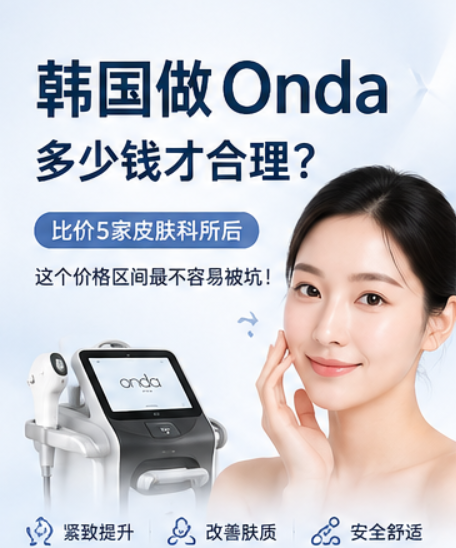
🔬 I. What exactly is Onda? Why is there such a big price difference?
Let’s first take a couple of sentences to clarify what Onda is, so you won’t confuse it with HIFU or Thermage.
Onda is a microwave lifting device developed by South Korea’s Lutronic company. It operates on a different principle from HIFU, which uses ultrasound, or Thermage, which employs radiofrequency. Onda utilizes 2.45GHz microwave energy, which can penetrate 3 to 7 mm beneath the skin. Its primary function is to heat the area at the boundary between the dermis and fat layers, thereby stimulating the production of new Collagen.
It comes with two probes: the 3-mm probe is used for superficial tightening treatments (around the eyes, Forehead), while the 7-mm probe is designed for deeper lipolysis and contouring procedures (Double Chin, jawline, cheeks). Due to its greater penetration depth and higher energy output, the 7-mm probe is typically 30% to 50% more expensive than the 3-mm probe.
So why is there a price difference of up to six times? There are four main reasons for this:
💡 ① Number of treatments: For the same area, the results are vastly different depending on whether 300 or 900 treatments are administered. Some low-cost clinics only offer 200–300 treatments, and the effect is practically negligible; standard treatments usually involve 600–900 treatments. The number of treatments is by far the most critical factor affecting the cost of Onda treatments. There is no other factor that matters more.
💡 ② Location premium: The rent for clinics located in Apgujeong, Gangnam, differs by 3 to 5 times compared to those in Mapo and Yeongdeungpo. This cost difference is directly reflected in the pricing. If you are willing to spend an additional 20 minutes on the subway, you can save 30% to 40% on the total cost.
💡 ③ Operator: Whether the procedure is performed by the director himself/herself or by a nurse may result in a price difference of up to twice. As Onda is considered a medical device, South Korea has regulations requiring that it must be operated by a licensed physician; however, not all clinics strictly adhere to these rules in practice.
💡 ④ Package Bundling: Many low-price offers are actually designed to attract customers—using low-cost Onda treatments to lure you in, and then recommending additional services during the in-person consultation. If you only opt for Onda without any additional treatments, the clinic’s profit margin is actually quite low. They’re simply betting that you will decide to purchase more services.
💡 There’s another detail that many people don’t know: the effectiveness of Onda treatments depends greatly on the skill of the practitioner. Assuming that the number of treatments administered is the same, an experienced doctor will adjust the energy output and treatment parameters according to the thickness and elasticity of your skin – something that the machine simply cannot do. Therefore, don’t just focus on the price or the number of treatments; the doctor’s expertise is also a crucial factor. If the clinic you visit has a doctor who performs hundreds of Onda treatments each year, that’s definitely a better option than one that only does a few treatments per month.
⚠️ Additionally, it’s important to note that when booking through Chinese intermediaries or travel agencies, the prices usually increase by 20% to 40%. This is because these intermediaries charge a commission. That’s exactly why we recommend booking directly through BeautsGO – the platform connects you with the official prices of the clinics, without any additional fees from middlemen.
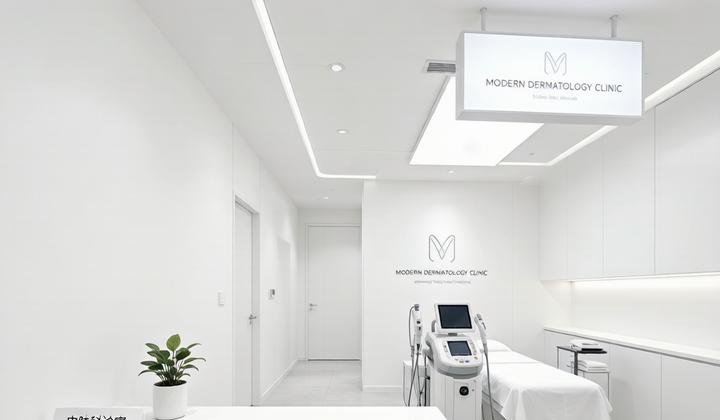
▲ In a standard Dermatology treatment room in South Korea, the equipment and operating environment are clean and professional (the image is for illustrative purposes only).
📊 II. A comparative analysis of the prices offered by 5 clinics in the Onda network
Below are the prices of 5 Dermatology clinics in Seoul that I compared (data from June 2026). All prices are listed in Korean won including taxes. The cost for a single treatment is as follows:
| clinic | region | Reference price for full-face treatments | Features |
|---|---|---|---|
| REPIC | Gangnam | ₩400,000 | The price is the lowest, but the basic package usually costs 300 yuan; the director personally performs the procedures; there may be longer waiting times during peak periods. |
| Kellyya | Gangnam | ₩600,000 to 800,000 | We offer 600 standard treatment packages; our consultants speak Chinese; our main clients are foreign tourists. |
| VS Line | Gangnam | ₩700,000 | Many locals choose this service; there are 7 million probes specifically designed for shaping the jawline; the waiting period for appointments is quite long. |
| GOLD J | Gangnam | ₩700,000 to 900,000 | The director has over 15 years of experience; the equipment is relatively new; no special pricing is offered to foreigners. |
| Cheongdam OKAY | Cheongdam-dong | Between ₩1,500,000 and 2,000,000 | Cheongdam-dong offers a high-end service: 900 treatments for the entire face and neck, with one-on-one personalized attention throughout the process. |
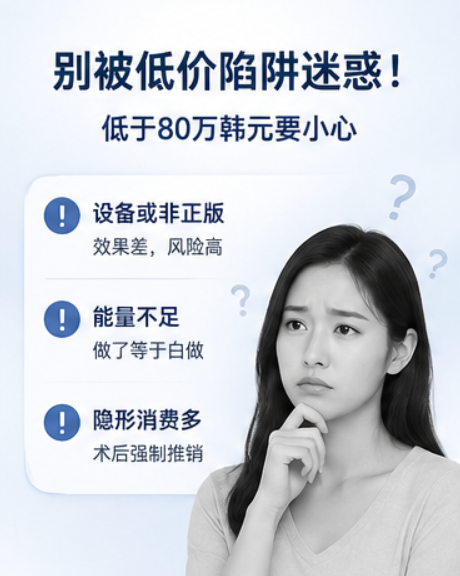
🎯 Quick summary: The reasonable price range for a standard Onda full-face treatment is ₩500,000 to ₩990,000 Korean won (approximately NT$12,000 to NT$21,000). Treatments priced below ₩400,000 are usually “promotional prices”; these may result in fewer treatments, be performed by non-medical professionals, or involve additional fees during the procedure. Treatments costing over ₩1 million are considered high-end options, and although they come with additional services, this does not necessarily mean that the results will be twice as good.
The above prices are based on what local people in South Korea pay. If you book through a Chinese intermediary or a travel agency, the price usually increases by 20% to 40%, as intermediaries charge a commission. This is exactly why it is recommended to book directly through BeautsGO – the platform connects you with the official prices of clinics, without any additional fees from middlemen.

💰 III. Four Key Variables Affecting the Price of Onda
When comparing prices, don’t just focus on the numbers; first, understand what exactly is included in the price quoted by the clinic.
📌 ① Number of treatments (Energy/Shots) — The most crucial factor. The effectiveness of Onda’s treatment is directly dependent on the number of shots administered. 300 shots are generally only sufficient to cover one side of the cheek; a standard full-face treatment requires at least 600 shots; if you also want to address the jawline and Double Chin, it is recommended to use more than 900 shots. When inquiring about the price, the first question you should ask is “How many shots are included in this package?” Many people only compare prices without considering the number of shots, which results in getting less effective treatment for the same amount of money.
📌 ② Types of probes: A 3-mm probe is used for tightening treatments, while a 7-mm probe is used for lipolysis. If a clinic only quotes one price, make sure to ask whether it refers to the use of either just the 3-mm probe or both the 3-mm and 7-mm probes together. The cost of a dual-probe treatment usually ranges 40% to 50% higher than that of a single-probe treatment. An important note: Some clinics’ “full-face” packages only include the use of the 3-mm probe, and using the 7-mm probe will incur an additional fee – be sure to clarify this before making a reservation.
💡 ③ Operator: “Who will perform the procedure for me?” Many people are too embarrassed to ask this question, but in fact, it is precisely what should be asked. According to South Korean law, medical devices like Onda must be operated by licensed physicians; however, some clinics use nurses instead in order to cut costs. If a clinic claims that its services are “very inexpensive”, you should ask who will actually perform the procedure. In South Korea, the price difference between when the clinic director performs the procedure himself/herself and when a nurse does so can be as much as double.
📌 ④ Are anesthesia costs included in the total price? Onda treatment usually does not require general anesthesia, but some clinics may charge additional fees for the anesthetic gel (ranging from ¥10,000 to ¥30,000). Make sure to ask, “Is the price already including anesthesia?” when getting a quote to avoid any extra expenses at checkout.
🔎 In addition to these four variables, there is another hidden factor worth considering: should you opt for a single treatment or a package deal? Many clinics offer promotions such as “buy three get one free”; in this case, the average cost per treatment is usually 20%–30% lower than if you purchased only one treatment. If you are certain that you will continue using these services in the long term, then a package deal is indeed more cost-effective. However, if this is your first attempt, it is recommended that you try a single treatment first to see how it works before committing to a larger purchase.
🎯 IV. How to book a service in the most cost-effective way? 5 practical tips
Based on the above comparisons and analyses, here are 5 practical suggestions for you to consider immediately:
🔑 ① Reasonable price range: ¥9.5 million to ¥9.9 million. Any price lower than ¥400,000 should raise concerns. This price range covers 600 standard treatment packages offered by most legitimate Dermatology clinics in Gangnam. If the quoted price is below ¥400,000, it is very likely a promotional offer either involving a reduced number of treatments (200–300 sessions) or additional conditions.
🔑 ② Avoid the peak seasons of summer and winter vacations. In South Korea, the peak seasons for medical aesthetics treatments are July-August (summer vacation) and December-January (winter vacation + Christmas). During these periods, it is common to find clinics fully booked, doctors overwhelmed with work, and prices increasing by 10% to 20%. March-May and September-November are relatively off-peak seasons; it is easier to make appointments, doctors are more patient, and prices remain more stable.
🔑 ③ First, verify the authenticity of the device. The Lutronic Onda equipment comes with a counterfeit-proof QR code; scanning it with your phone will direct you to Lutronic’s official verification page. When you arrive at the clinic, ask to see the actual device. If they refuse to show it to you – leave immediately. On a genuine Onda device, the probe emits a slight “beep” sound during treatment, which is a normal indication of the microwave pulses. If you don’t hear any sound at all, be extra cautious.
🔑 ④ Avoid the peak hours on weekends. Most people in South Korea go for cosmetic treatments on weekends, so clinics are usually very crowded on Saturdays. If you have flexible time, it is recommended to schedule appointments on Tuesdays or Thursdays in the morning – doctors will be more energetic, there will be no rush, and the quality of treatment will be better guaranteed.
🔑 ⑤ By using BeautsGO to make reservations, you can save time and avoid communication barriers. Calling each clinic individually to inquire about prices is not only time-consuming but also prone to misunderstandings due to language differences. With the BeautsGO app, you can easily search for Onda, compare the prices and reviews of different clinics, select a date, and make a reservation directly. Chinese-speaking customer service is also available to assist you in checking the status of your reservation. The platform itself charges no additional fees.
❓ Frequently Asked Questions
⏱️ Q: How long does the effect of Onda last after one treatment?
Generally speaking, it las
ts for 6 to 12 months. The principle behind Onda is to use heat energy to stimulate the production of new Collagen; the effects are not immediate. You will start to notice a tightening sensation 2 to 4 weeks after the treatment, and the results become most apparent after 2 to 3 months. The duration of the effect depends on individual factors such as physical constitution, the amount of hair, and post-treatment care. With proper at-home maintenance (moisturizing and sun protection), it is entirely possible for the effect to last for 12 months.
😌 Q: Is it painful during the Onda treatment?
Compared to HIFU and Therma
ge, the pain level during Onda treatment is relatively lower. During the procedure, the skin will feel warm, and there may occasionally be slight stinging sensations; however, most people can tolerate it without the need for anesthesia. If you are particularly sensitive to pain, you can inform the clinic in advance and request topical anesthesia.
⚡ Q: Is 300 treatments enough?
To be honest, 300 trea
tments are only sufficient for targeted areas such as the eye contour or a small portion of the cheeks; it’s not enough for a full face treatment. If you come across particularly low-priced Onda packages, the first thing you should ask is about the number of treatments included. The recommended standard for a full face treatment is at least 600 treatments. Remember this: when evaluating the cost-effectiveness of Onda, what matters is not the total price, but the price per treatment.
🔄 Q: How often can it be done?
Onda is a non-invasi
ve treatment, so theoretically, the next session can be scheduled 2 to 4 weeks after the previous one. However, considering that it takes some time for Collagen to regenerate, most people opt for an interval of 1 to 3 months. If it’s your first time trying this treatment, it’s recommended to try it once first to see the results before deciding whether to continue. There’s no need to rush into buying a package; you can always start again if you’re satisfied with the results.
🔍 Q: How can I tell if the device used in a treatment is an authentic Onda device?
Look for these three signs: ① The device must have the Lutronic brand logo; ② It should have a counterfeit-proof QR code that can be scanned; ③ The device’s casing must be white with silver-gray accents (this is the exclusive color of Onda devices). If the device looks old or lacks the anti-counterfeiting code, it is likely a fake. Additionally, during treatment, the probe of a genuine Onda device will emit a slight “beep” sound—this is the normal indication that microwave pulses are being generated.
💆 Q: What precautions should be taken after the Onda treatment?
You can wash your face
and apply makeup as usual on the day of the treatment, but it is recommended not to use very hot water to wash your face within 24 hours, and also avoid taking saunas or soaking in hot springs. For the first week after the treatment, make sure to use moisturizing products and protect your skin from the sun; avoid using skincare products containing acids or retinol. Unlike HIFU or Thermage, Onda generally does not cause significant redness or swelling, so you can go shopping or eat out immediately after the treatment without any issues.
🤔 Q: How should one choose between Onda, HIFU, and Thermage?
Simple distinction: Thermage focuses on sk
in tightening and is suitable for those with obvious signs of skin laxity. It causes the most discomfort but offers the longest-lasting results (over one year); HIFU is designed for lifting effects and is ideal for those with blurred jawlines or sagging facial features. It causes moderate discomfort; Onda, on the other hand, emphasizes gentle anti-aging treatments and is perfect for those with mild to moderate skin laxity, who are sensitive to pain and prefer gradual improvements. It causes the least discomfort and allows for the fastest recovery. If your budget ranges from ₩500,000 to ₩900,000, you are sensitive to pain, and you want natural, gradual results — Onda is the best choice for you.
✅ Summary: Who is the right candidate for Onda treatment?
✅ Suitable for: People whose skin has begun to loose but not yet requires a facelift surgery; those who want to improve the contours of their jawline and reduce their Double Chin; those who are afraid of pain and prefer not to use HIFU or Thermage; and those with a budget of around ₩500,000 to ₩900,000 — Onda is an excellent choice.
❌ Not recommended for: those with severe skin laxity (in such cases, the effectiveness of Onda is limited; HIFU or thread lifting may be more appropriate); pregnant or breastfeeding women; those with metal implants in the face or a pacemaker; or those with a budget of less than 400,000 Korean won who still expect significant results – in such cases, a low-cost Onda device is essentially a waste of money.
📚 For further reading: More tips on medical beauty treatments in South Korea
🔗 Can you really trust low-price packages offered by Dermatology clinics in Seoul? Look for these 3 certification marks – even if the price is as low as 300,000, it’s still worth considering.
🔗 8 frequently asked questions about making appointments at Dermatology clinics in South Korea! How much in advance should one schedule an appointment? Can treatments be done during menstruation? Will there be any charges if the appointment is rescheduled?
🔗 Reviews of Dermatology clinics offering HEV treatments in South Korea | What they offer, price lists, booking procedures, and real patient cases
🔗 A comprehensive overview of Titanium Lifting costs in South Korea: prices are clearly listed as 40KJ, 80KJ, and 100KJ – no need to guess on your own!
🔗 A Complete Guide to Prices and Appointments at Aloha Dermatology in South Korea — How to Make the Most Cost-Effective Appointment at This Clinic in Mapo District? Just read this article.
🔗 A guide to avoiding pitfalls in Dermatology services in South Korea: If you don’t clarify these 5 key issues in addition to the price, you’re simply becoming an easy target.
Internal link recommendations · Related articles for further reading