 By 變美體驗官
 Every time I see someone asking in the medical aesthetics community, “How much cash should I bring when going to a Dermatology clinic in South Korea?”, the answers are always varied. Some say it’s safest to bring all the money in cash; others claim that using a credit card results in a better exchange rate; some mention that Alipay is widely available everywhere; and still others suggest that converting US dollars before traveling is the most cost-effective option. So, which one is correct?
The answer is: Both are correct, yet neither is entirely accurate. In fact, the payment methods in South Korea’s Dermatology sector have undergone significant changes between 2025 and 2026 – WeChat Pay now allows users to scan local QR codes in South Korea directly, and the coverage rate of UnionPay has increased significantly. However, the tax refund policy for medical beauty treatments has been abolished. If you are still using the payment methods from 2023, many of these details are now outdated.
This compilation outlines all the latest payment methods available in South Korea’s Dermatology sector for the year 2026 – ranging from card payments, QR code scanning, cash transactions to tax refunds – explaining them all in one place.
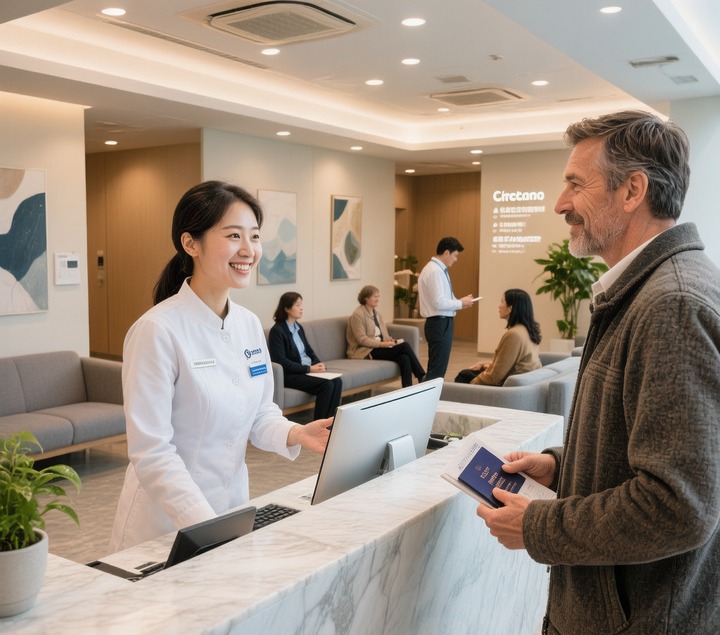
Payment Method 1: Credit Card/Debit Card (The most common method, with a coverage rate of over 95%)
In South Korea’s Dermatology clinics, using a credit card is the most basic and error-free method of payment. Nearly 100% of Dermatology clinics in popular tourist areas such as Myeongdong, Gangnam, and Hongdae in Seoul accept credit cards.
Which cards can be used?
| Card Types | Acceptance rate | Handling fees | Recommendation |
|---|---|---|---|
| Visa / Mastercard | ★★★★★ Almost all clinics charge a fee for this service. | Overseas transaction fee: 1.5% | The safest option is to bring just one with you. |
| UnionPay card | ★★★★☆ Clinics in Myeongdong/Gangnam generally accept this service. | No handling fees required (payment is made directly in RMB). | The exchange rate is the most favorable; UnionPay cards issued in Taiwan can also be used. |
| JCB | ★★★☆☆ Large clinics are suitable; small ones may not be. | 1.5% | Some models come with spare parts, but they are not recommended as the primary option. |
| American Express | ★★☆☆☆ Low acceptance rate | 2-2.5% | It is not recommended to rely on AE cards. |
Is there a fee for using a card to make a payment?
Under normal circumstances, this is not necessary. In South Korea, the transaction fees for credit cards are borne by the merchants, so consumers do not need to pay anything additional. However, it is important to note that…
- Very few small clinics may charge an additional 3-5% fee when using a credit card for payment (this is usually mentioned in person at the time of service).
- Regular clinics such as UMI, Onecell, and the lift do not charge any handling fees when customers use their cards for payments.
- If the clinic claims that there is an additional charge for using a credit card, you can request to pay in cash or by another method.
💡 Little tip: When swiping your card, if the staff asks, “Will you pay in won?” be sure to choose “Yes”. If you opt for payment in Taiwanese dollars or RMB through DCC (Dynamic Currency Conversion), the exchange rate is usually very unfavorable, resulting in an additional loss of 3-5%.
Payment Method 2: WeChat Pay / Alipay (Great improvements in 2026!)
This is undoubtedly the most surprising development in 2026. In April 2026, WeChat Pay officially announced that QR codes for payments across South Korea could be scanned directly via WeChat. In other words, you no longer need to look for a “WeChat-specific QR code”; simply open WeChat and scan local QR codes from services such as KakaoPay, Samsung Pay, or ZeroPay in South Korea to complete the payment process.
The use of WeChat Pay in Dermatology clinics in South Korea
| Scene | Usability | Note |
|---|---|---|
| Large-scale Dermatology clinics in Myeongdong/Gangnam | ★★★★★ Widely supported | Counters usually have QR Code signs. |
| Small and medium-sized clinics | ★★★☆☆ Varies depending on the clinic. | It is recommended to check with BeautsGO before setting off. |
| Street-side pharmacies / Post-operative care products | ★★★★★ Chains like Olive Young also offer this support. | Just scan the KakaoPay QR code. |
What about Alipay?
Alipay also has a high penetration rate in South Korea, especially in areas frequented by Chinese tourists such as Myeongdong and Dongdaemun. The Alipay+ system has integrated multiple local payment platforms in South Korea, and its usage experience is similar to that of WeChat Pay – users simply need to scan the local QR codes to make payments.
Precautions
- Both WeChat Pay and Alipay have limits on the amount per transaction or per day: generally, the upper limit for a single transaction ranges from RMB 5,000 to 20,000 (depending on the level of identity verification). For high-value purchases like Thermage treatments, which cost around NT$40,000 to $50,000, it may be necessary to split the payment into two transactions or use a credit card instead.
- The exchange rate is updated in real-time: WeChat or Alipay will deduct the amount directly from your RMB account (or the linked Taiwanese dollar account) at the current exchange rate. Generally, this method results in a more favorable rate than exchanging cash.
- Before departing, make sure you have sufficient funds in your wallet or that your credit card is linked to your account – this will prevent you from encountering payment issues once you arrive in South Korea.
Payment Method 3: Cash (Korean Won)
Although electronic payment systems in South Korea are highly developed by 2026, cash still represents a “hidden preferential channel” for some Dermatology clinics in the country.
When is it appropriate to use cash?
- Some clinics offer cash discounts: Paying in cash can get you 5-10% off. When you go to the counter, just ask, “Is there a cash discount available?”
- Small-scale spending: Buying post-treatment masks, ointments, ice packs, etc. from street vendors – paying in cash is definitely the most convenient way.
- Emergency backup: In case your credit card is declined or your phone runs out of battery, cash is your ultimate safety net.
How much cash should I bring with me?
General recommendations:
- If you mainly use your credit card for payments, it’s sufficient to bring around 100,000 to 200,000 South Korean won (approximately NT$2,400 to NT$4,800) as an emergency fund.
- If you want to get a discount by paying in cash, please prepare the corresponding amount based on the total cost of your treatment plan.
- Advice on currency exchange: It is recommended to exchange a small amount of money first in Taiwan (at the airport or a bank), and then exchange a larger sum in Myeongdong. The exchange rates at currency exchange offices in Myeongdong are usually more favorable than those in Taiwan.
Payment Method 4: Overseas transfer/Taiwan dollar remittance
Very few clinics accept overseas remittances; it is usually necessary to confirm this in advance with customer service. This method is primarily used in the following situations:
- For major surgeries (such as plastic surgery, which fall outside the scope of Dermatology), a deposit must be paid in advance.
- Pay for all services in one lump sum through a booking platform.
Generally, Dermatology treatments do not require overseas transfers. For services booked through BeautsGO, payment is made on-site, eliminating the need for advance remittances.
Important change in 2026: Tax refunds for medical aesthetics treatments have been abolished!
It is important to emphasize this: Starting from January 1, 2026, the South Korea government officially abolished the policy of VAT refunds for medical beauty services provided to foreign tourists.
Before the tax refund was canceled vs After it was canceled
| project | Before cancellation (~December 31, 2025) | After cancellation (from January 1, 2026 onwards) |
|---|---|---|
| Tax refund rate | 10% of the total amount spent | 0% (Canceled) |
| Minimum single transaction amount | Over 30,000 Korean won | Not applicable |
| Maximum tax refund amount per person | 100,000 to 200,000 Korean won | Not applicable |
| Methods of tax refund | Airport self-service tax refund machines / Instant tax refunds in urban areas | Not applicable |
In the past, it was possible to get a refund of 180,000 to 220,000 South Korean won (approximately NT$4,300 to NT$5,200) for a single Thermage treatment, but now this refund is no longer available. Nevertheless, the prices for Dermatology treatments in South Korea are still much cheaper than those in Taiwan. Taking Thermage as an example, the cost in Taiwan ranges from 80,000 to 120,000 NT dollars, while in South Korea it is around 43,000 to 52,000 South Korean won. Even without the ability to get a tax refund, customers can still save 30,000 to 70,000 NT dollars.
A comprehensive comparison of all payment methods
| Payment Methods | Convenience | exchange rate | Handling fees | Acceptance rate | Recommendation Index |
|---|---|---|---|---|---|
| Visa/Mastercard credit cards | ★★★★★ | ★★★★☆ (International Organization Exchange Rates) | 1.5% | Over 95% | ⭐⭐⭐⭐⭐ |
| UnionPay card | ★★★★☆ | ★★★★★ (Payment in RMB directly) | 0% | Over 80% | ⭐⭐⭐⭐⭐ |
| WeChat Pay | ★★★★★ | ★★★★☆ | 0% (with some cases reaching 0.1%) | Over 70% (rapid growth) | ⭐⭐⭐⭐ |
| Alipay | ★★★★★ | ★★★★☆ | 0% | Over 70% | ⭐⭐⭐⭐ |
| Korean won in cash | ★★★☆☆ | ★★★☆☆ (Location for currency exchange) | Exchange rate differences | 100% | ⭐⭐⭐ (⭐⭐⭐⭐⭐ when there is a discount) |
Checklist for Pre-departure Payment Preparation
Prepare according to this list, and you’ll have no troubles paying when you arrive in South Korea:
- Primary Card: Bring either a Visa or Mastercard (make sure the overseas transaction feature is enabled).
- Reserve card: Bring a UnionPay card – it usually offers the best exchange rates and there are no fees involved.
- Mobile payments: Bind your credit card to WeChat or Alipay to ensure you have sufficient funds in your wallet.
- Cash: Exchange 100,000 to 200,000 South Korean won for emergency use.
- Before departure: Call your bank to inform them of your travel dates, so as to prevent your card from being locked due to risk control measures.
- When visiting a clinic: First, ask, “Is there any cash discount available?” to see if you can get a discount when paying in cash.
- When swiping your card, always select “Korean Won settlement” and refuse any dynamic currency conversion via DCC.

ognized
A landmark of Myeongdong · User-friendly in Chinese
THE LIFT Dermatology Myeongdong Branch
📍 1 Myeongdong-gil, Jung, Seoul, next to Hyundai Department Store (2 minutes’ walk from Exit 6 of Myeongdong Station on Line 4)
🕐 Daily from 10:00 AM to 8:00 PM / Open all year round
💳 Payment methods: Visa, Mastercard, UnionPay, WeChat Pay, Alipay, or cash.
| Titanium Lifting for the Entire Face | Starting from 350,000 ⩢. |
| LDM hyaluronic acid injections | Starting from 150,000 ⩢. |
| Ultherapy HIFU | Starting from 1.1 million ⩢ |
| Rejuran Hyaluronic Acid Injection 2 centum core | Starting from 280,000 ⩺ |
FAQ: Common Questions Regarding Payments in Dermatology in South Korea
Q1: Can Taiwanese credit cards be used at Dermatology clinics in South Korea?
Certainly, and it’s quite common. Visa and Mastercard cards issued in Taiwan can be used almost anywhere in South Korea’s Dermatology clinics. Before traveling, make sure to confirm with your bank that overseas transaction services are enabled to avoid any issues with your cards while in South Korea.
Q2: Is it convenient to use UnionPay cards at Dermatology clinics in South Korea?
It’s extremely convenient to use. UnionPay has a very high coverage rate in South Korea, and almost all clinics in Myeongdong and Gangnam support it. The biggest advantage is that there are no fees for overseas transactions (payments can be made directly in RMB or New Taiwan dollars), and the exchange rates are also more favorable than those of Visa or Mastercard. Many financial cards issued by Taiwanese banks already come with UnionPay functionality, so just check before you travel.
Q3: Can WeChat Pay really be used in Dermatology clinics in South Korea?
Starting from April 2026, that will be possible! WeChat Pay has now been integrated with South Korea’s national payment QR Code system. You can directly scan QR Codes from local Korean services such as KakaoPay or ZeroPay to make payments, without the need to use a special WeChat code. However, if the cost of your treatment is relatively high (for example, around NT$40,000 to $50,000 for Thermage), it is recommended to use a credit card or UnionPay card to avoid any limits imposed by WeChat on single transactions.
Q4: Which is more cost-effective – using cash or swiping a card?
Each method has its pros and cons: Using a credit card usually results in a better exchange rate than exchanging cash (especially when comparing the rates offered by international organizations with those at local currency exchange offices). However, some clinics offer a 5-10% discount when payments are made in cash. Here’s what I recommend: First, use your credit card to make the payment, and then ask at the counter whether there is any cash discount available. If there is a discount and it’s significant enough (more than 5%), go ahead and pay in cash.
Q5: Can payments be made in installments at Dermatology clinics in South Korea?
Installments are generally not offered. Clinics in South Korea usually require payment in full at the time of consultation. If you make an appointment through BeautsGO, you will need to pay the full amount on the day of your visit. For some major surgeries (such as plastic surgery), it may be possible to negotiate installment plans with the clinic, but this is basically not available for Dermatology treatments.
Q6: How is the exchange rate calculated when using a credit card for transfers? Will I get cheated?
The exchange rate for card transactions is calculated based on the international exchange rates of Visa/Mastercard/UnionPay on that particular day, making it completely transparent. The only potential pitfall is DCC (Dynamic Currency Conversion): some payment terminals will ask you whether you want to pay in “Korean Won” or “Taiwan Dollar”; always choose Korean Won (KRW). If you choose Taiwan Dollar, the exchange rate is usually much worse, resulting in an additional cost of 3-5%.
Q7: Has the tax rebate for medical aesthetics really been completely abolished in 2026?
Indeed. The South Korean government officially abolished the VAT refund policy for medical beauty services consumed by foreign tourists on January 1, 2026. Previously, a 10% refund was available for transactions amounting to 30,000 South Korean won; now, this policy has been completely eliminated. Nevertheless, even without the tax refund, the costs of medical beauty treatments in South Korea are still much lower than those in Taiwan, so the cost of round-trip air tickets is actually saved as well.
Q8: What should I do if the card payment fails?
First, check the following: ① Whether your card allows international transactions; ② Whether the single-transaction limit is sufficient (call your bank to confirm); ③ Whether your card has been locked due to risk control measures. If any of these issues arise, use an alternative card or pay in cash. It is recommended to prepare at least two different payment methods before traveling abroad—never put all your eggs in one basket.
📚 Recommended Reading: More tips on medical beauty treatments in South Korea
- 🔗 Is a South Korean mobile phone number required to make an appointment with a Dermatology clinic in South Korea? Here are some ways for overseas travelers to schedule appointments.
- 🔗 What if I don’t speak Korean and need to visit a Dermatology clinic in South Korea? A step-by-step guide for overseas tourists seeking medical treatment
- 🔗 A comprehensive guide for Taiwanese sisters going to Korea for their first Dermatology treatment: How to book tickets and accommodation in one go
- 🔗 2026 Seoul’s Popular Dermatology Treatments: Price List (updated monthly) | Real-time quotes for Thermage/Rejuran/Pico treatments available publicly
- 🔗 A guide to avoiding pitfalls in Dermatology services in South Korea: If you don’t clarify these 5 key issues in addition to the price, you’re simply becoming an easy target.
- 🔗 Reviews of UMI Dermatology in South Korea | What people think, price list, reservation process, and real customer cases
Internal link recommendations · Related articles for further reading
cation
Transparent prices · Personal consultations by the director
UMI Dermatology Myeongdong Head Office
📍 2nd Floor, No. 13, Myeongdong 7-gil, Jung, Seoul (3 minutes’ walk from Exit 5 of Myeongdong Station on Line 4)
🕐 Monday to Friday: 10:00-19:00 / Saturday: 10:00-16:00 / Sunday: Closed
👨⚕️ Representative Director: Dr. Yin Zhongyu (with over 15 years of experience in dermatology)
| Rejuran Hyaluronic Acid Injection 2 centum core | 250,000₩ |
| Thermage 600 device | Starting from 1.8 million ⩢. |
| ONDA Thermage | Starting from 300,000 ⩢. |
| Botox for facial slimming in South Korea | Starting from 50,000 ⩺ |